Arameans
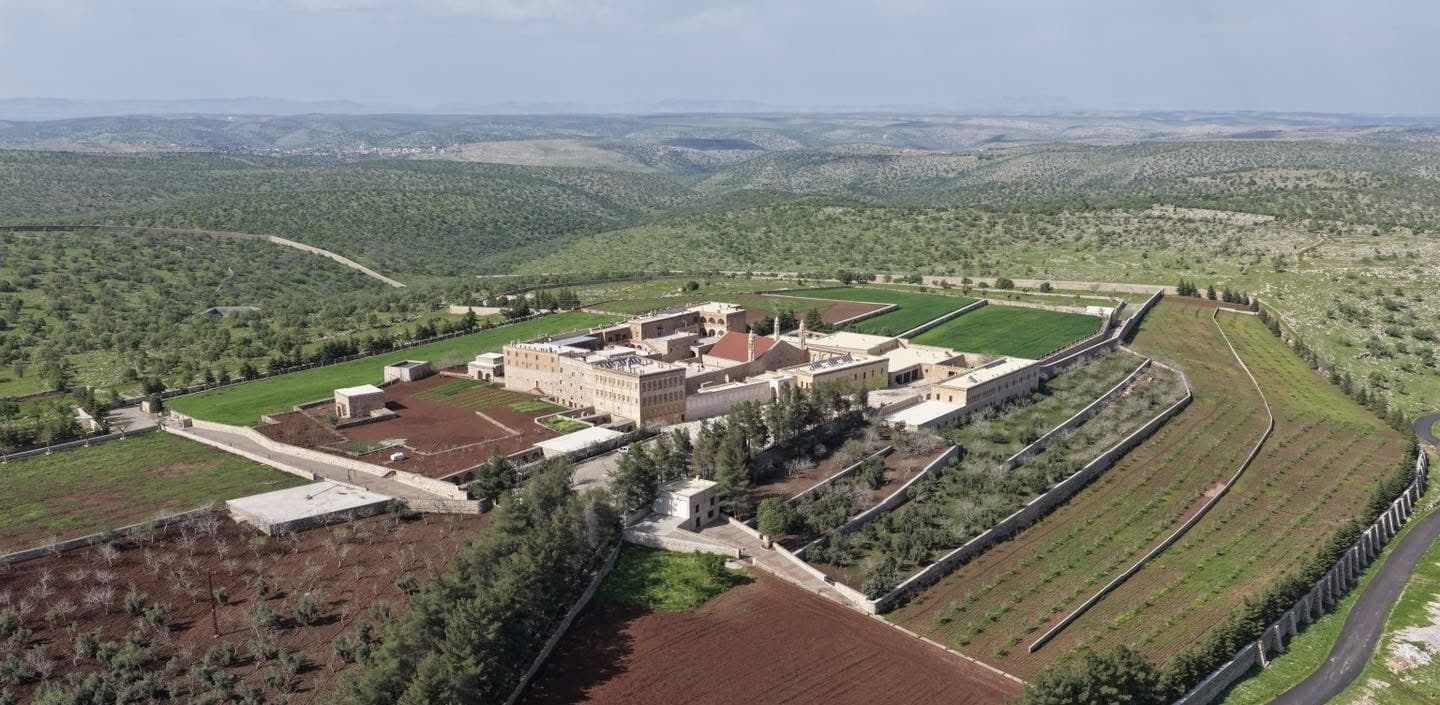
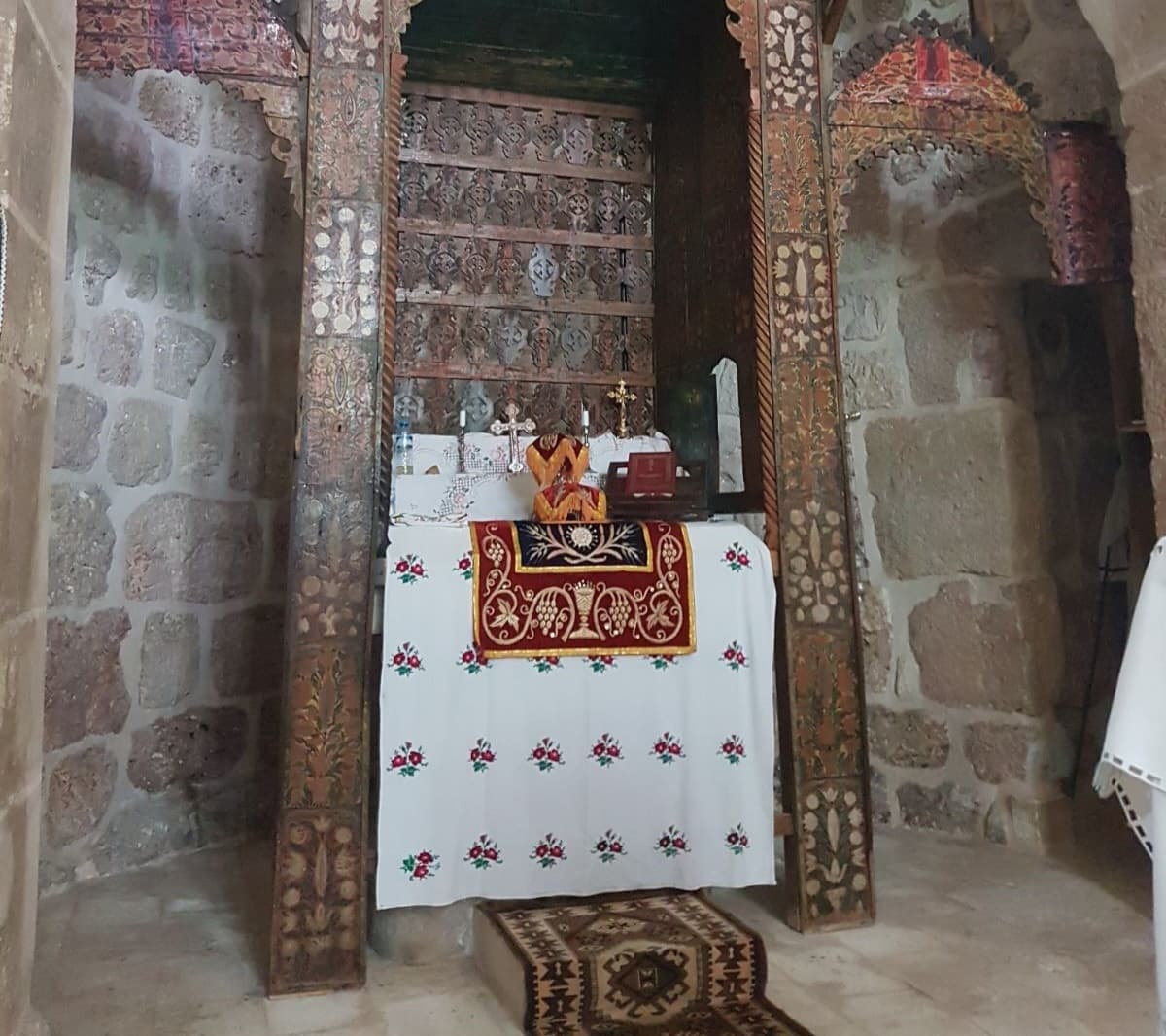
Mor Gabriel Monastery Lands in Tur Abdin Face Sale Threat — Aramean Community Urged to Act
The Mor Gabriel Monastery, one of the oldest and most important centers of the Aramean/Syriac Orthodox people, is facing a serious threat after two historic monastery land areas in Tur Abdin were reportedly put up for sale by the Turkish state.

Aramean Elder Gevriye Ego, 92, Shot Dead in Enhil — Midyat Court Acquits Kurdish Accused Despite Strong Evidence
 A
AArameans
Apr 2, 20264 min readAramean Elder Gevriye Ego, 92, Shot Dead in Enhil — Midyat Court Acquits Kurdish Accused Despite Strong Evidence
AArameans
Apr 2, 20264 min read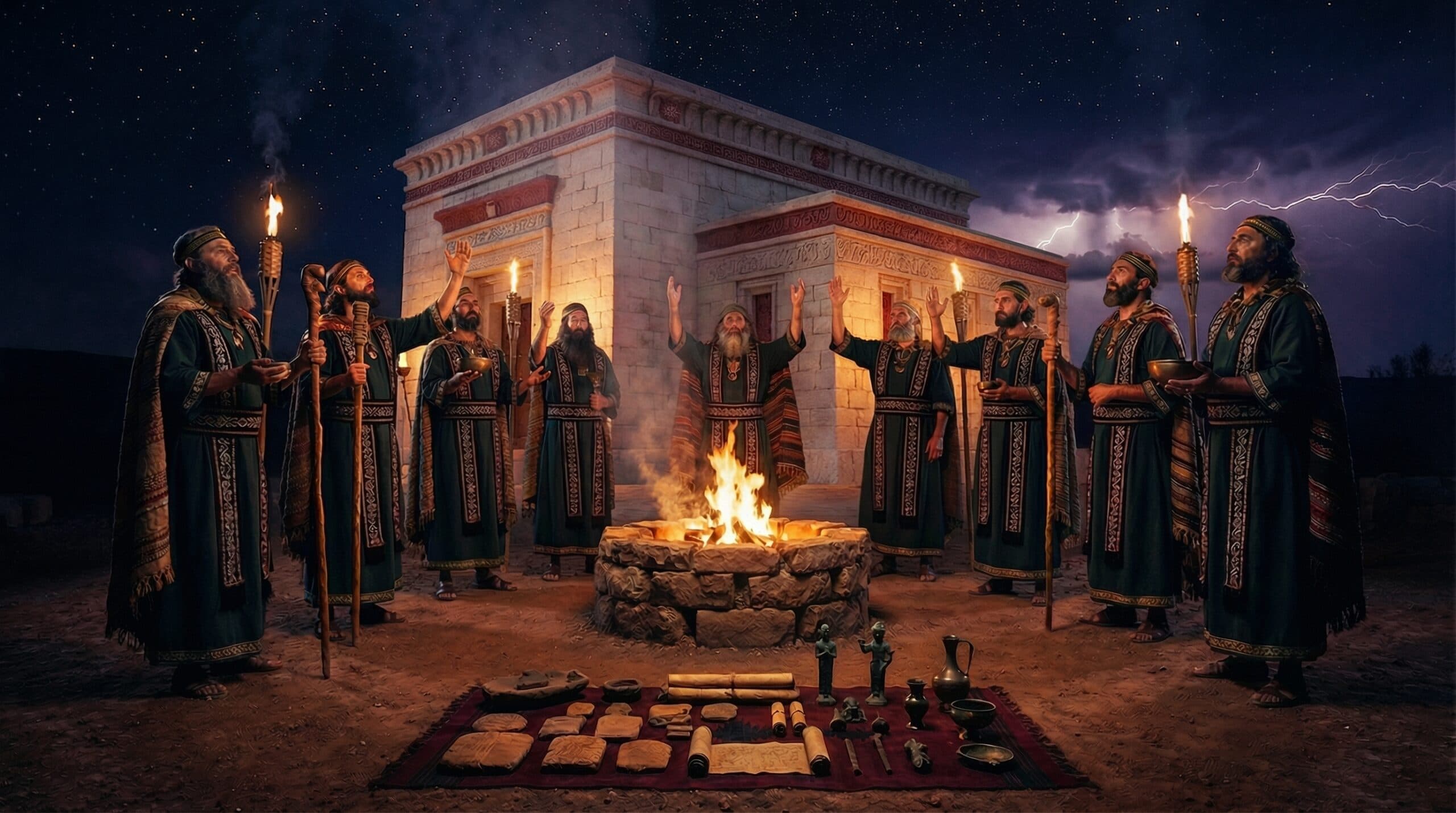
Ancient Syria & Anatolia: Aramean Mythology, Religion & Traditions
 E
EElija Elias
Mar 26, 202619 min readAncient Syria & Anatolia: Aramean Mythology, Religion & Traditions
EElija Elias
Mar 26, 202619 min read
Ancient DNA from the Halzi Gate (612 BC) Confirms Aramean Continuity in Mesopotamia and What It Means for Modern Arameans
AArameans
Mar 14, 202640 min readAncient DNA from the Halzi Gate (612 BC) Confirms Aramean Continuity in Mesopotamia and What It Means for Modern Arameans
AArameans
Mar 14, 202640 min read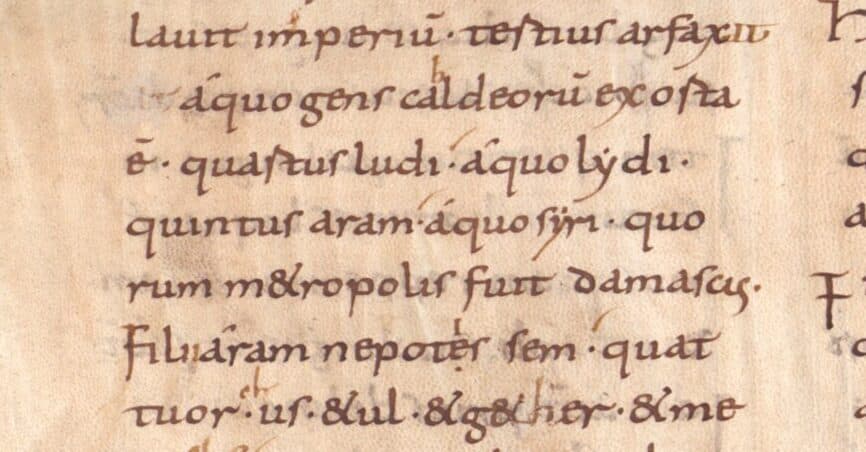
 Isidore of Seville
Aram from whom the Syrians come
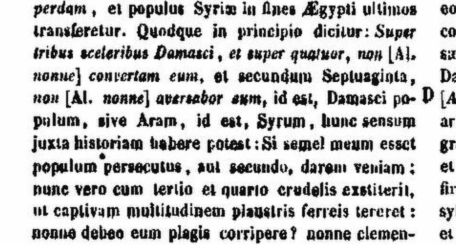
"The sons of Shem, five in number, each individually begot single nations. Of whom the first was Elam, from whom the Elamites, princes of Persia: the second Assur, from whom the empire of the Assyrians burgeoned: the third Arphaxad, from whom the race of the Chaldaeans arose: the fourth Lud, from whom the Lydians: the fifth Aram, from whom the Syrians, whose metropolis was Damascus."



 Jerome of Stridon
Rezin king of Aram, that is, the Syrians
"What seems to me to be explained in this way: we read in Isaiah that Rezin king of Aram, that is, the Syrians, who reigned in Damascus, and Pekah son of Remaliah king of Israel, with the intention of fighting against Judah, came (Isa.VII): concerning whom the Lord directs Achaz king of Judah and Jerusalem not to be afraid of the two half-burnt torches: because as a sign of complete liberation, the Virgin's conception and childbirth are shown to him."

 Jerome of Stridon
Aram That is Syria
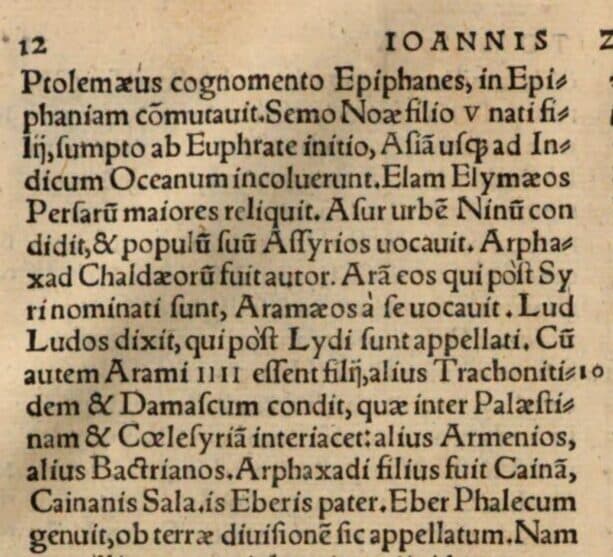
"Give understanding, that Azael, when Ozia and Jeroboam reigned, was already dead in Syria, and his son Benadad succeeded him in the kingdom, from whom all the later kings of Aram, that is, Syria and Damascus, took the name Benadad." "For we read that Theglathphalasar, king of Assyria, after killing King Rezin of Damascus, of whom Isaiah speaks, transferred all the people of Syria, who were called Aram, to Cyrene, and for this reason it is said now (2 Kings 16)." "...shall I not (Alternate: shall I not indeed) reject him, that is, the people of Damascus, or Aram, that is, Syria, can have this meaning according to the history: If they had persecuted my people once, or even twice, I would have forgiven them."


 Cornelius a Lapide
From Aram Come The Arameans That Is Syrians
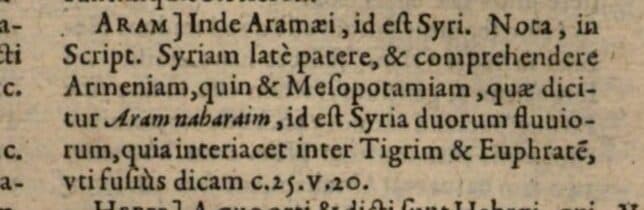
"ARAM. — From him came the Arameans, that is, the Syrians. Note that in Scripture ‘Syria’ has a broad extent, and includes Armenia, and even Mesopotamia, which is called Aram-Naharaim, that is, the Syria of the two rivers, because it lies between the Tigris and the Euphrates, as I shall discuss more extensively in chapter 25, verse 20."
 Pavlos Karolidis
Pre-Islamic Arameans
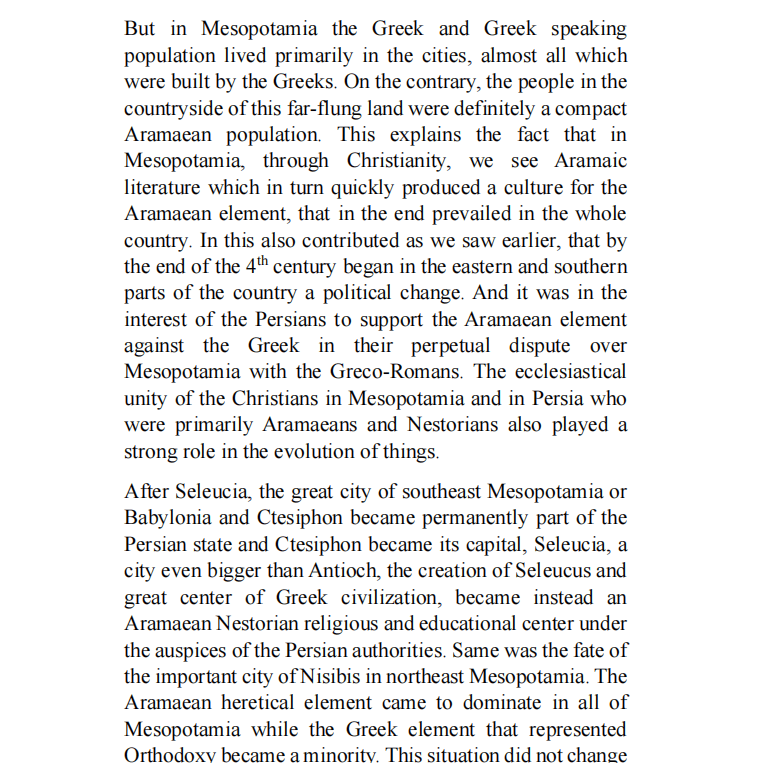
"But in Mesopotamia the Greek and Greek speaking population lived primarily in the cities, almost all which were built by the Greeks. On the contrary, the people in the countryside of this far-flung land were definitely a compact Aramaean population. This explains the fact that in Mesopotamia, through Christianity, we see Aramaic literature which in turn quickly produced a culture for the Aramaean element, that in the end prevailed in the whole country. In this also contributed as we saw earlier, that by the end of the 4th century began in the eastern and southern parts of the country a political change. And it was in the interest of the Persians to support the Aramaean element against the Greek in their perpetual dispute over Mesopotamia with the Greco-Romans. The ecclesiastical unity of the Christians in Mesopotamia and in Persia who were primarily Aramaeans and Nestorians also played a strong role in the evolution of things. After Seleucia, the great city of southeast Mesopotamia or Babylonia and Ctesiphon became permanently part of the Persian state and Ctesiphon became its capital, Seleucia, a city even bigger than Antioch, the creation of Seleucus and great center of Greek civilization, became instead an Aramaean Nestorian religious and educational center under the auspices of the Persian authorities. Same was the fate of the important city of Nisibis in northeast Mesopotamia. The Aramaean heretical element came to dominate in all of Mesopotamia while the Greek element that represented Orthodoxy became a minority."