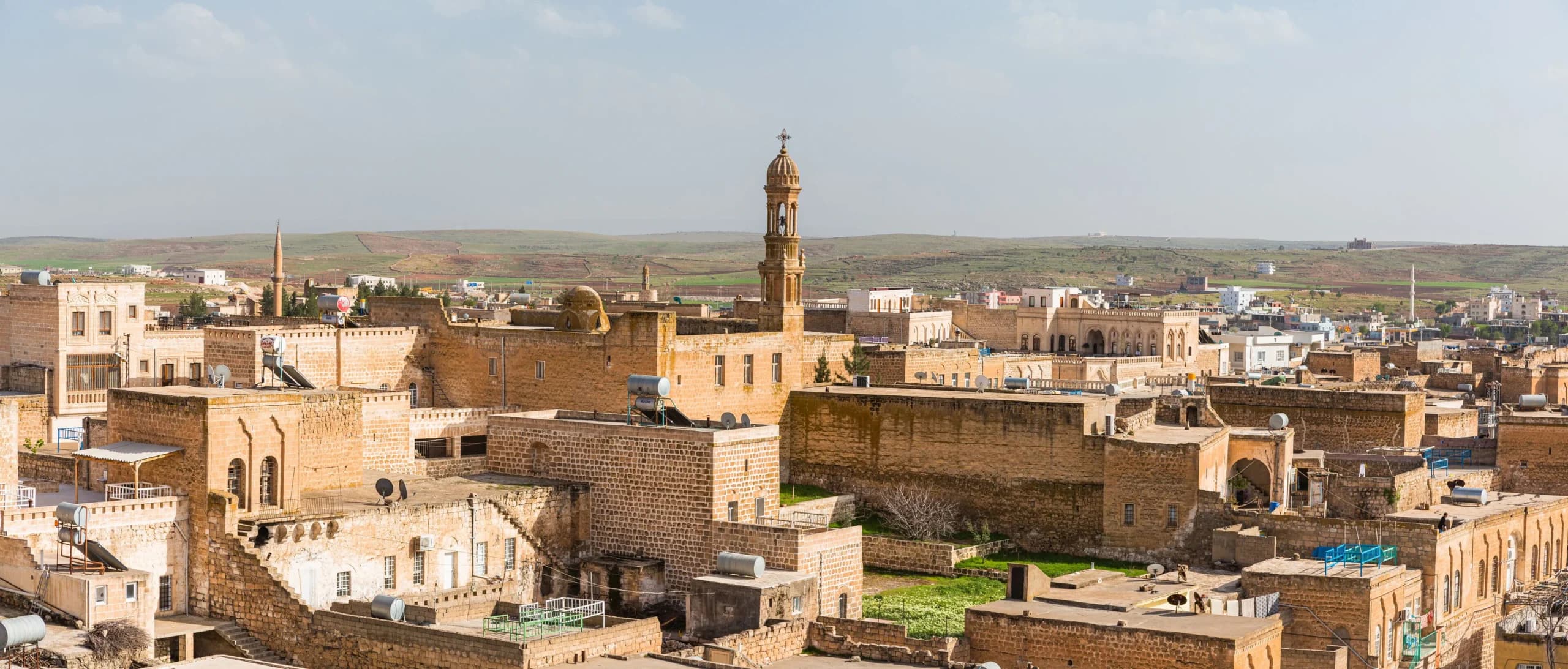

Due to the vast geographic expansion of the Aramean kingdoms, their religion was not a single, uniform system, but was shaped by strong regional differences and outside influences. Especially in Northern Syria and Southern Anatolia, the Aramean religious world existed in direct neighborhood to the religion of the Neo-Hittite states. This led to a deep mutual influence, with the Arameans primarily adopting elements from their neighbors. This is clearly reflected in the inscriptions and the iconography from centers such as Sam'al, Nairab, and Tell Halaf.
The influence of Phoenician culture also significantly shaped religious practices in Northern Syria, as shown by finds from Brēǧ near Aleppo and Hamat. At the same time, clear influences of the Assyrian religion can be seen in Eastern Mesopotamia. A perfect example is the prayer statue from Tell Feḫerīje: the inscription there gives the Aramean god Hadad the titles of a Mesopotamian storm god, highlighting the deep cultural connection between these regions. Furthermore, Judaism had a influence on the Arameans, evidence for this can be found in Galilee , an important settlement area of Jewish Arameans, as well as in southern Syria.
A closer look at the religion reveals that while there was no single, uniform religion across all Aramean kingdoms, there was one defining element: the storm god Hadad stood at the head of the pantheons in the Aramean kingdoms of whole Syria and south Turkey
The Aramean Pantheon: Mythology of Mesopotamia
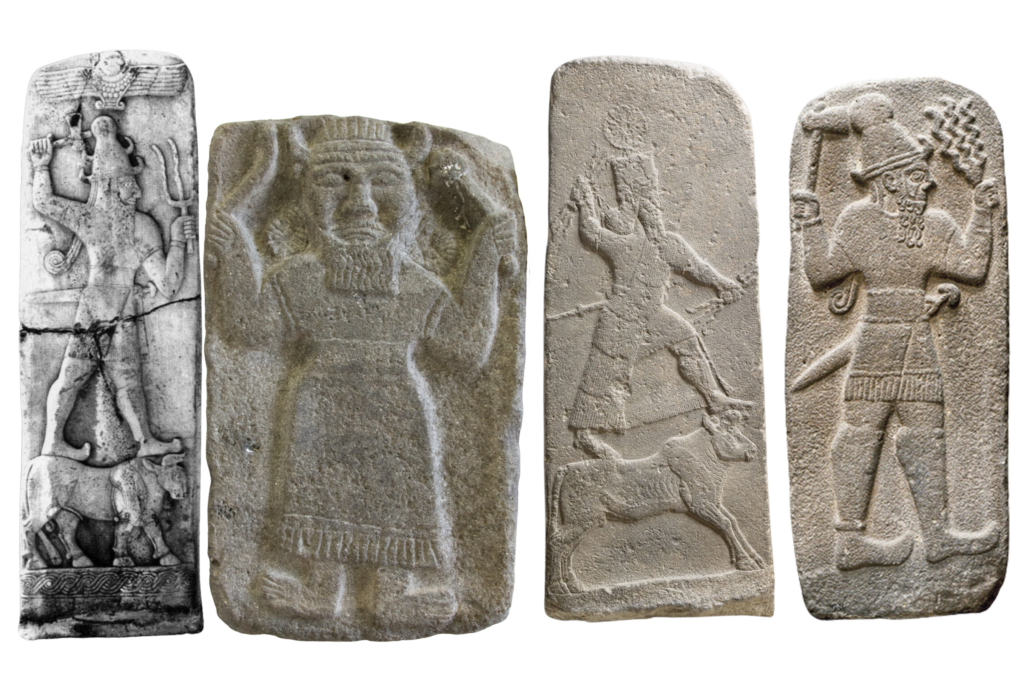
The god Hadad, who stood at the head of the Aramean pantheons, was a storm god. Since rain-fed agriculture was dominant in Upper Mesopotamia and Syria, he played a decisive role in bringing rain, ensuring vegetation, and the fertility of both people and livestock. In other regions like the Aramean kingdoms of Bit-Gabbari and Bit-Agusi, he was therefore known as "Hadad of the Vineyards". Furthermore, the close bond between Hadad and the ruling dynasties is significant, as he often functioned as a god of war in this context. His worship was also linked to specific important cult sites: the Hadad of Aleppo held the most prominent position, but the Hadad of Guzana and Sikan, the Hadad of Imma, and the Hadad of Damascus are also well-known from ancient inscriptions.
In his iconography, he is depicted holding a thunderbolt in his right hand and a bundle of lightning in his left. This corresponds with the epithet 'rammānu' (Thunderer), which appears in several ancient Near Eastern inscriptions and is also found in the Old Testament (2 Kings 5:18; Zechariah 12:11). Some depictions of Hadad include a bull that he rides. However, the bull is actually found in later images and was very likely added due to the influence of the ancient babylonians or other religions. Later on, images also began to give Hadad a female companion or consort. Goddesses such as Kubaba, Ishtar, Astarte, Anahid, Schuwala, Anat and later Atargatis were introduced, which was primarily a result of Phoenician, Assyrian, Anatolian and Egyptian influence. In antiquity, faith was not necessarily bound to a single nation but developed regionally, which is why other nations, such as the Assyrians, also erected statues of Hadad
In 2 Kings 17:30, Ashima (’ǎšîmā’) is documented as a goddess worshipped by the inhabitants of the Aramean city of Hamath. Even when looking at non-biblical records, it remains difficult to determine the exact origin and function of this deity.
Aramean Monotheism: Bethel and Biblical Encounters with Yahweh
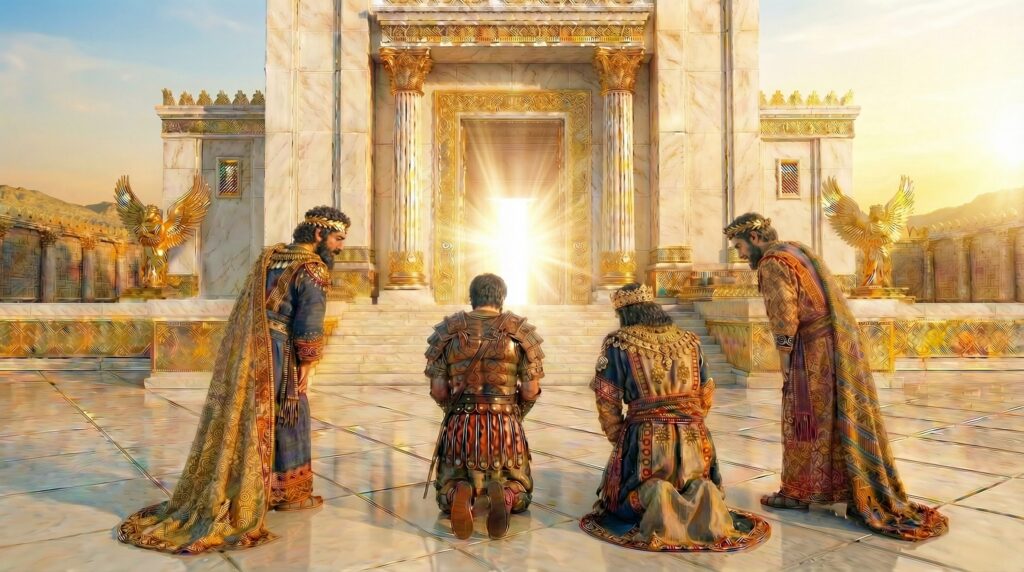
In addition to other deities such as the moon god of Haran, a minority of Arameans in parts of modern-day southern Syria, as well as in the region Galilee and certain regions of Upper Mesopotamia held monotheistic beliefs in Iron Age Syria. As previously mentioned, this religious direction developed through the influence of Judaism and focused on El, the God of Abraham and the monotheistic God of the Jews. Clear evidence for this development can be found in both Aramaic and cuneiform texts of that period.
In primary sources, Bethel (God) is attested in Syria from the 7th century, in Southern Mesopotamia during the 6th and 5th centuries, and in Egypt during the 5th and 4th centuries BC. This evidence appears firstly in personal names, secondly in compound divine names, and thirdly in historical texts. The regional evidence is structured as follows.
- 1) Syria: In an Aramaic loan document from Sfire dating to 571 BC, three names are found. These include Bjt’ljd‘, meaning Bethel has recognized, and Bjt’ldlnj, meaning Bethel has saved me. A third name is Bjt’l‘snj, which means either Bethel has created me or Bethel has come to my aid.
- 2) Southern Mesopotamia: Here, the god is documented through names such as Bīt-ili-nuri, meaning Bethel is my light. Other examples include Bīt-ili-da-la-’ and Bjt’ldlnj for Bethel has saved me as well as Bīt-ili-a-dir-ri for Bethel is glorious.
- 3) Egypt: In Elephantine, Syene (Assuan), and Hermopolis, the following names are found:
- Bjt’lšzb “Bethel saves”
- Bjt’lnd/tn “Bethel has given”
- Bjt’ltdn “Bethel, may you give (or: judge)”
- Bjt’lnwrj “Bethel is my light”
The Bible shows that the God of Israel (Yahweh) did not only care about his own people. He also guided the history and the lives of the Arameans. Here are four significant Arameans and their relationship with God:
1. Naaman – The Healed General
- Source: 2 Kings 5:1–19
- Story: Naaman was the commander of the Aramean army. He was highly respected because the Bible says that God had already given him great military victories. However, he suffered from leprosy, a serious skin disease. His pride was tested when the prophet Elisha told him to wash in the simple Jordan River. After he did so, he was completely healed.
- Relation to God: Naaman realized that the God of Israel was the only true God. He even took soil from Israel back to Damascus to build an altar for the Lord.
2. Hazael – God's Chosen King
- Source: 2 Kings 8:7–15; 1 Kings 19:15
- Story: Hazael was an official in Damascus. The prophet Elisha, the devoted disciple of Elijah, traveled to Damascus and told Hazael that he would become the next king. After hearing this, Hazael killed the sick King Ben-Hadad to take the throne for himself. God commanded the prophet Elijah to anoint Hazael as king over Aram. Under his rule, Aram-Damascus became a very strong military power that controlled large parts of Israel.
- Relation to God: The Bible explains that God himself chose Hazael to become king to act as a tool in the history of the region.
3. Ben-Hadad – The King who Besieged Samaria
- Source: 1 Kings 20; 2 Kings 6:24 – 7:20
- Story: Ben-Hadad was a powerful king who led an alliance of 32 smaller kings. He surrounded the city of Samaria and caused a terrible famine. He was very arrogant and sure that his large army would win easily.
- Relation to God: God showed his power by making the Aramean army hear the sound of a huge imaginary army. This caused them to flee in panic, and the city was saved by a miracle from God.
4. Rezin – The Last Great Ally
- Source: 2 Kings 16:5–9; Isaiah 7:1–9
- Story: Rezin was the King of Damascus. He made an alliance with the King of Israel to attack Jerusalem and remove the King of Judah. He wanted to place his own ruler there to create a strong front against other powers. This pressure was so great that the King of Judah became desperate and asked the Assyrians for help.
- Relation to God: God sent the prophet Isaiah to tell the King of Judah not to be afraid. God called Rezin a "smoldering log," meaning his power was almost gone and his plans would fail.
The Aramean Seraphim of the Old Testament
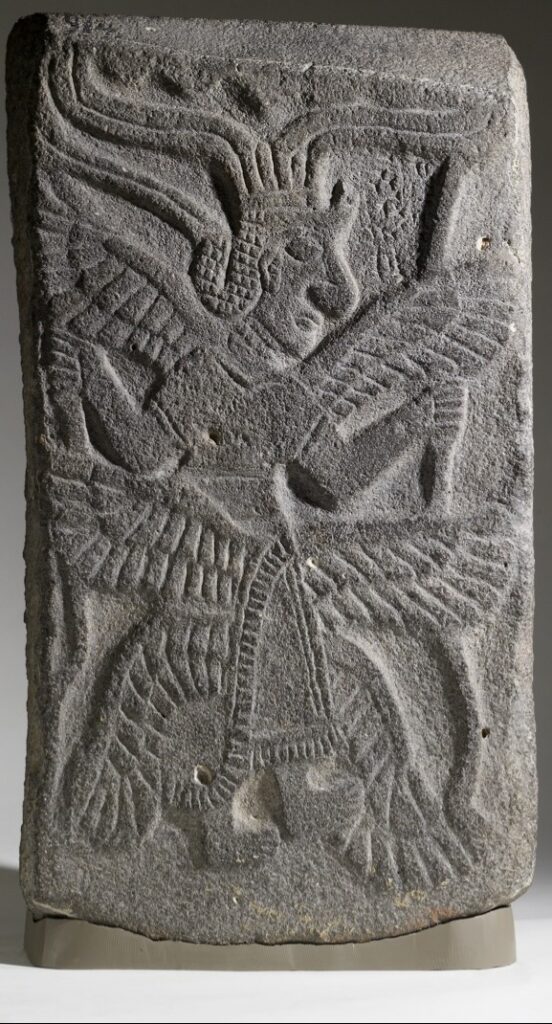
The ancient city of Guzana (capital of Bit-Bahiani), mentioned in the Old Testament as Gozan, holds a unique place in biblical history. Following the Assyrian conquest of Samaria in 722 BCE, the Israelites were resettled here. This deportation allowed Jewish traditions to influence the Aramean population of Northern Mesopotamia.
A sensational discovery by orientalist Max von Oppenheim at Tell Halaf in 1899 provides a direct visual link to this shared history: an Aramean orthostat depicting a figure with six wings. This archaeological find mirrors the vision of the prophet Isaiah (Isa 6:2), who described the celestial Seraphim with exactly six wings. In Aramean art, these figures served as powerful guardians who destroyed the enemies of the realm.
Furthermore, inscriptions from the region clarify key biblical concepts. The statue from neighboring Tell Fekheriye contains the Aramaic term for the Garden of Eden, as found in Gen 2-3. The inscription also reveals that the terms for "image" (ṣlm) and "likeness" (dmwt) were used interchangeably. According to Prof. Dr. Izak Cornelius, this proves that the concept of the "Image of God" in Genesis 1:26 was originally understood as a single idea with no distinction between the terms.
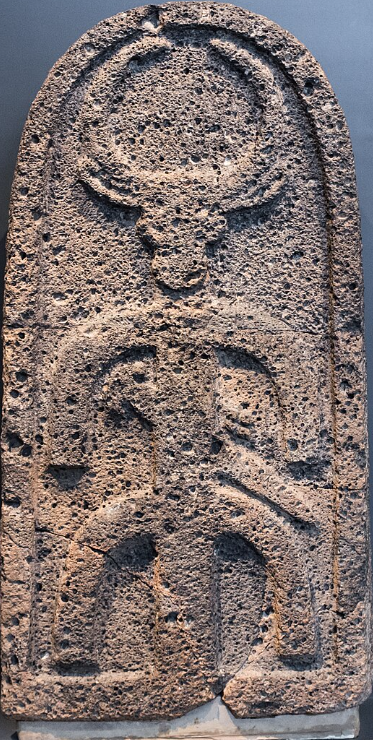
While Bethsaida did not last long after Jesus’ time, it had existed for about 1,000 years before him. It is commonly believed that Bethsaida was the ancient city of Zer, that was the capital city of the kingdom of Geshur. King David married the daughter of the King of Aram-Geshur and she was the mother of David’s son, Absalom. It was to Geshur that Absalom fled for three years after Absalom had had his brother, Amnon, murdered (2 Sam 13:37)
(The orthostat represents a captive demon serving to deter other demonic spirits)
Festivals and Sacred Times
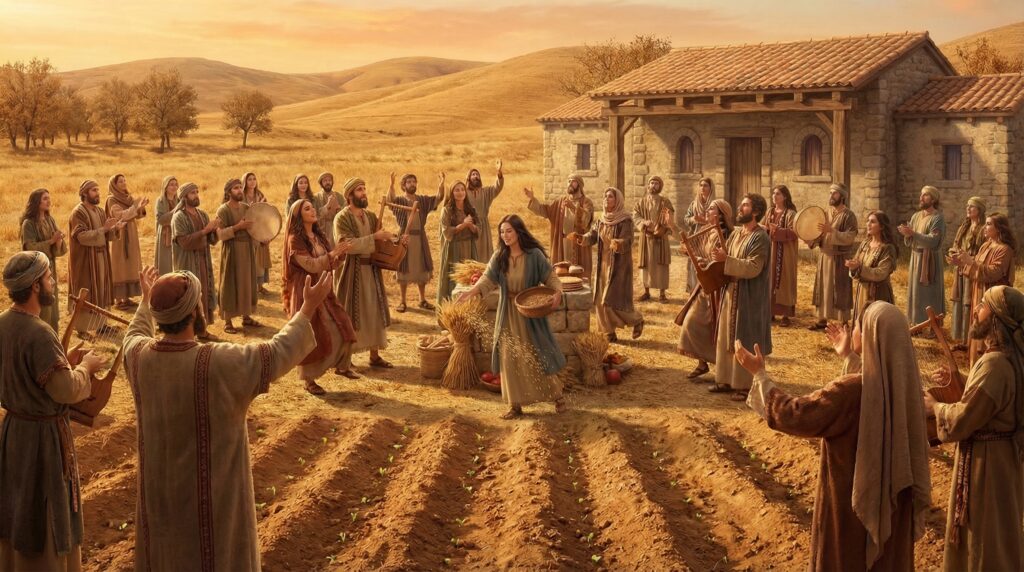
The flow of daily life was regularly interrupted by various festivals. These special times included elaborate cults and unique rituals, which gave time a deep mythological meaning. The 1st, 7th, and 15th days of every month were especially important for the ancestral cult as dedicated days of rest when all work paused. Besides these monthly traditions, agricultural festivals were also a central part of life.
The most important Aramean event of the year was the New Year festival in autumn. The month of October was particularly significant because it was the beginning of the sowing season. This period, which lasted from October to December, was the focus of the community. At the same time, the Arameans celebrated a mythological turning point: the return of the storm god from the underworld. During these days of rest, the entire community focused on the renewal of nature to ensure the survival and prosperity of the land.
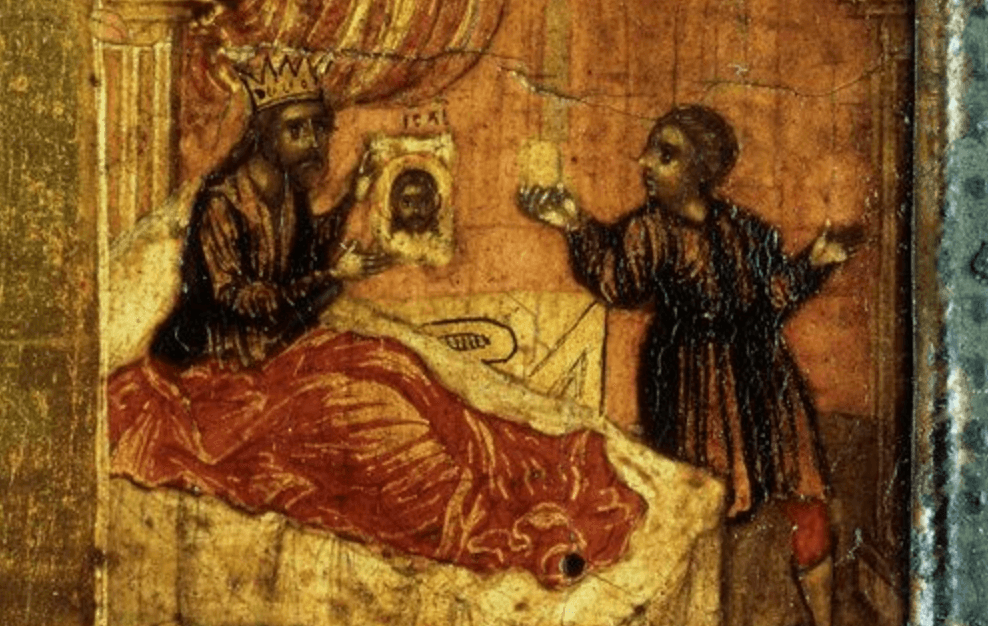
Later in Christian history, Syriac scholars such as Mor Jacob of Edessa composed significant works regarding the Calendar of the Lord's feasts. In this tradition, the Syriac New Year (Rish Shato d'Suryoye) is observed on the first day of October. This celebration commemorates the Aramean King Abgar and his conversion to Christianity. By marking the new year on this date, the Syriac tradition honors the historical transition of the Aramean people into the Christian faith, linking their ancient royal heritage with their spiritual identity. Scholars like Bar Hebraeus noted in the 13th century that the 1st of October was established in reference to the Jewish Feast of Tabernacles. Crucially, this date falls exactly one day before Hoshana Rabbah (the Great Salvation), the significant seventh day of Sukkot.
Aramean Prophets and Seers: The Secrets of Ancient Astrology and Divination
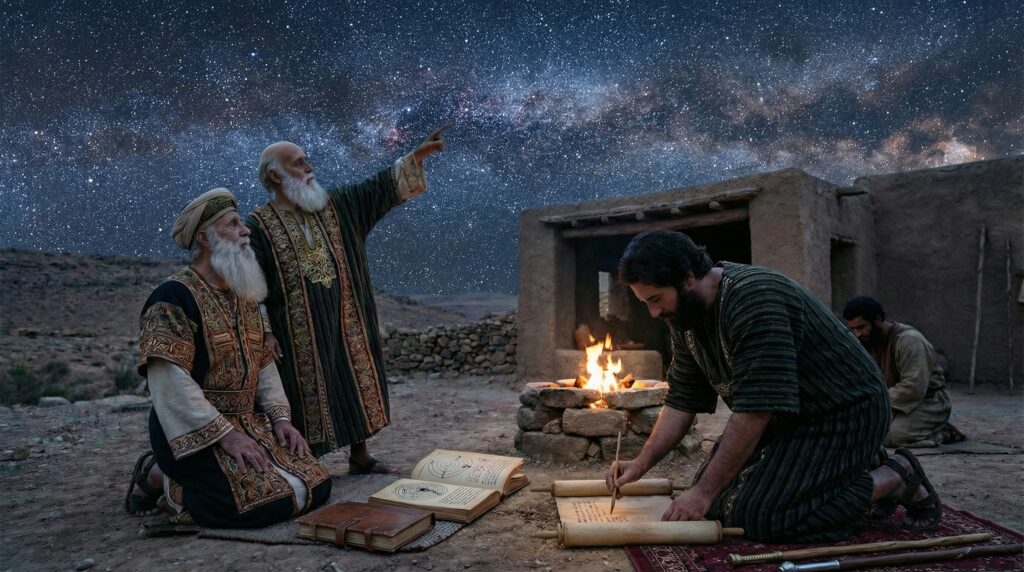
In the worldview of Aramean antiquity, there was no such thing as chance. Everything that happened, whether a massive calamity like a plague, a famine, or a war, or on a deeply personal level childlessness or bitter need, was understood as a direct expression of the divine will. Such events were viewed unmistakably as indicators of the gods' wrath. To find a remedy and avert impending doom, it was of critical importance to determine the exact causes and reasons for this divine grievance. One had to find out how the angered deities could be reconciled. This is where Aramean seers and prophets stepped in. Using magical practices or the making of solemn vows, they attempted to understand and influence the gods' decisions in specific situations, ensuring their favor.
That seers and prophets actually existed in Aramean religion can be historically proven, for example, by the inscription of King Zakkur of Hamath and Luash, written around 800 BC. The rites they employed varied widely and served to divinely determine nearly every aspect of life. However, it is important to know that this was not a purely Aramean practice. Generally, ancient Mesopotamian religious leaders made use of a whole array of techniques and mechanisms to interpret the warnings and messages announced through signs. Their goal was to obtain information about what was to come that was otherwise inaccessible to mortals. One of the main reasons why the study of the stars attained such paramount importance in the Ancient Near East surely lies in the mutual exchange of ideas with astronomy. Indeed, the same experts, known as scribes, were responsible for both the art of astrology and the science of astronomy. These scholars observed and recorded the movements of the stars and planets with the utmost attention, in order to read the future from them.
Apparently, the moon was not just a timekeeper for the ancient inhabitants of Mesopotamia, but a messenger of a dark fate. Whenever the sky darkened and a lunar eclipse approached, pure terror took hold of the court, for it was firmly believed that this sign foretold the imminent death of the ruler. To outsmart the wrath of the stars, the people resorted to an unprecedented deception. The true king went into hiding, concealing himself deep within his palace, while a simple prisoner of war or a servant of the palace, mockingly called a gardener, was raised to the throne. This unfortunate substitute king was allowed to wear the purple robe for a maximum of one hundred days, without ever enjoying the true power of a king. He served merely as a human lightning rod, meant to draw the misfortune intended for the real king onto his own head. As soon as the period ended, the substitute king was executed without mercy, so that the evil omen would sink into the grave with him, which ultimately proved to be a rather deadly privilege. Only after his blood was shed and the true ruler had cleared himself of any stain through countless purification rituals did he dare to ascend his throne once more.
The World of Magic
Into the world of magic, the ancient Arameans integrated a vast array of rituals. Extending well into the Roman period, images of evil spirits were painted onto so-called incantation bowls, which were then bound and sealed by inscriptions running in a circular pattern; this served to prevent other demons from approaching the house or its inhabitants. While incantation bowls were typically buried in fixed locations within the home, Arameans also carried metal amulets (lamellae) for protection while traveling. These portable amulets served the same purpose as the bowls and were crafted from thin sheets of silver, gold, bronze, or lead.
One of the most famous magic formulas originating from Aramaic, and one that is familiar to us today primarily through films like Harry Potter — is 'Abrakadabra' (Aramaic: avrah k’davra). Literally translated, it means something like 'I will create as I speak': Abra is derived from the Aramaic bra (to create), ka means 'while' or 'as,' and dabra is the first person of the verb daber (to speak).
Interestingly, from a historical perspective, the word was originally a healing spell used for the gradual reduction of illnesses. However, the first confirmed mention of the word is found not in a secret book of spells, but in the medical treatise De Medicina Praecepta by the Roman scholar Serenus Sammonicus (2nd century AD). It is quite possible that this practice had died out among the Arameans long before the time of Serenus Sammonicus and was revitalized through oral tradition and his subsequent written record, eventually reaching into our modern pop culture.
Aramean magic was even utilized in international politics. The Sefire Steles (8th century BC) contain so-called mimetic curses (imitative magic).
The principle was simple: during the signing of a treaty, rituals were performed to symbolize the fate of anyone who broke the agreement. The inscriptions read: "Just as this wax is consumed by fire, so shall Mati‘-ilu be consumed by fire," or "Just as this bow and these arrows are broken, so shall the gods Inurta and Hadad break the bow of Mati‘-ilu."
A unique feature of Aramean inscriptions (Sefire, Tell Fekheriye, Bukan) are the futility curses. These aimed to systematically destroy an enemy's very livelihood by ensuring that despite immense effort, no harvest or sustenance could be achieved

The Kingship
In the entire ancient Near East the king was regarded as the heir of the highest god and functioned as his earthly representative. In this respect the ruler was the guarantor of the divinely intended order which he established and maintained through the cults held in the temples as well as through his care for jurisdiction. During his lifetime the king was not considered a god. After his death however he was granted divine honors within the framework of the royal funerary cult by building a cult site for him and providing associated offerings. The king is the mediator of blessing and salvation for the land and the people and as the builder of the temples is responsible for the imperial cult.
In the context of the Aramean kings the royal names documented several times in Brēǧ near Aleppo in the kingdom of Bit-Agusi and in Aram-Damascus such as Bar-Hadad meaning Son of Hadad as well as the name Bar-Rakkab meaning Son of Rakkab attested in Samal in the kingdom of Bit-Gabbari are of particular importance. Several Aramean kings claim to have been brought to power by Hadad. For the Aramean tribes of the 2. millennium BC who still had to live under other rulers kingship was a new institution that only became detectable starting from the beginning of the 1. millennium BC.
In the Aramean royal ideology the tradition originating from the Hittites according to which the king becomes a god upon his death was adopted. Specifically this included the erection of a statue of the deceased in the burial chamber as well as in the city or palace gate. Furthermore the meal of the deceased king with the highest god of the pantheon and the sacrifice of the successor on the royal throne before the statues of the highest god and the deceased king are noteworthy. The architectural implementation of the royal funerary cult is found in the city sanctuary of Tell Halaf in Northeastern Syria where the seated statue of a deceased royal couple and a storm god stood together on a pedestal and could be offered sacrifices together in the same act.

Ancient Aramean Funerary Rites
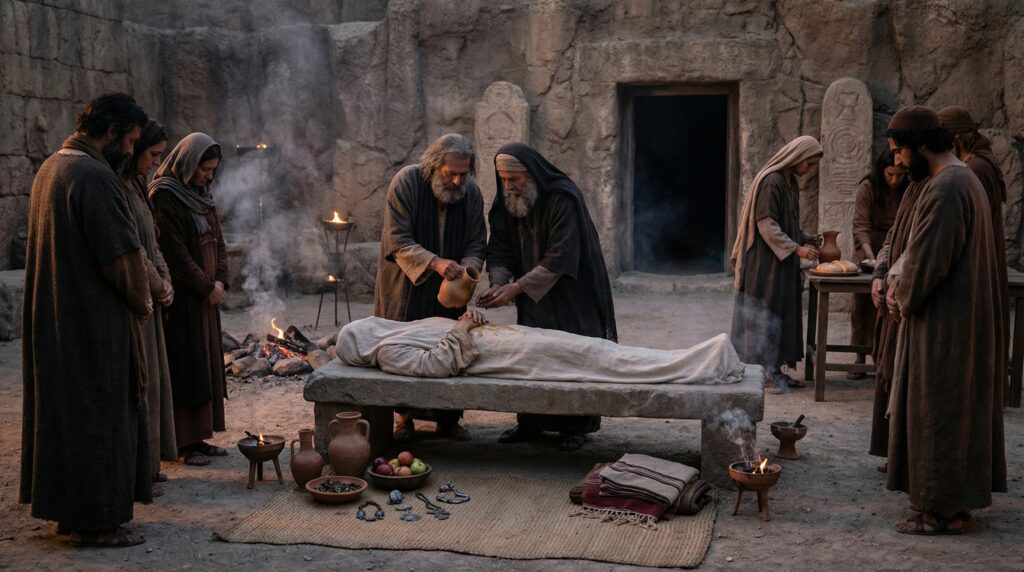
The care of the dead was an essential part of the Aramean religious world. The funerary rites included the washing, anointing, and preservation of the deceased until the burial, officially concluding with the sealing of the grave, similar as we know today. However, further rites accompanied the transition of the deceased from the grave into the afterlife. These traditions were closely linked to visits to the tomb, sacrificial acts, and the placement of grave goods. Particularly wealthy individuals, who could afford such elaborate ceremonies, invested in these rituals to ensure that the soul was indeed safely guided into the realm of the dead.
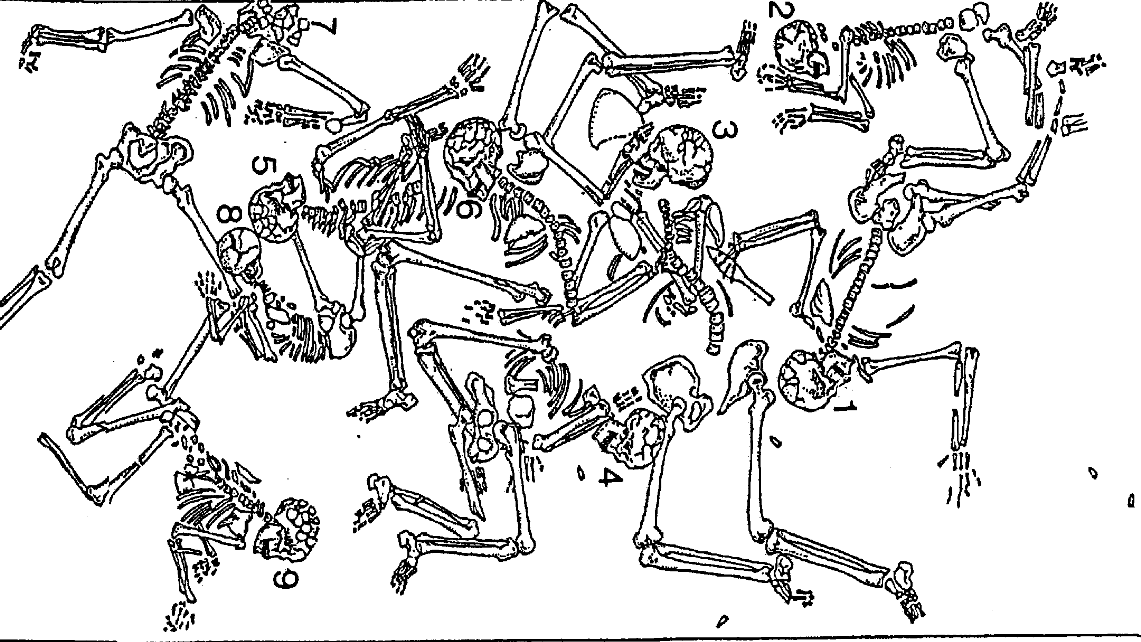
This was followed by integration rites, which were celebrated in the world of the living through banquets held with the spirits of the dead. The ultimate goal of these feasts was the reunion of the deceased with their ancestors in the afterlife. Among the Arameans of Syria, both full-body inhumation and the cremation of the corpse are historically documented. This diversity of burial practices is archaeologically and iconographically verifiable, for instance, in Tell Halaf. Located within the Aramean kingdom of Bit Bahiani in Upper Mesopotamia, the finds there illustrate the complex and regional variations of Aramean funerary culture and their beliefs regarding the journey of the soul.
Sources
- Britton, John P. / Walker, Christopher B.F., 1996, Astronomy and Astrology in Mesopotamia, in: C.B.F. Walker (Hg.), Astronomy Before the Telescope, London
- Das wissenschaftliche Bibellexikon Divination (Alter Orient)
- Barbara Böck, 2016
- Biggs, Robert D., 1990, Medizin. A. Mesopotamien, in: D.O. Edzard (Hg.), Reallexikon der Assyriologie und Vorderasiatischen Archäologie7, Berlin / New York,
- Rochberg–Halton, Aspects of Babylonian Celestial Divination
- Niehr, H., Religion in den Königreichen der Aramäer Syriens, in: C. Bonnet / H. Niehr, Religionen in der Umwelt des Alten Testaments II. Phönizier, Punier, Aramäer, Stuttgart 2010, 189-324.
- Niehr, H., Religion, in: ders. (Hg.), Aramaeans, 127-203.
- Department of Ancient Studies, Stellenbosch University, Stellenbosch, South Africa