





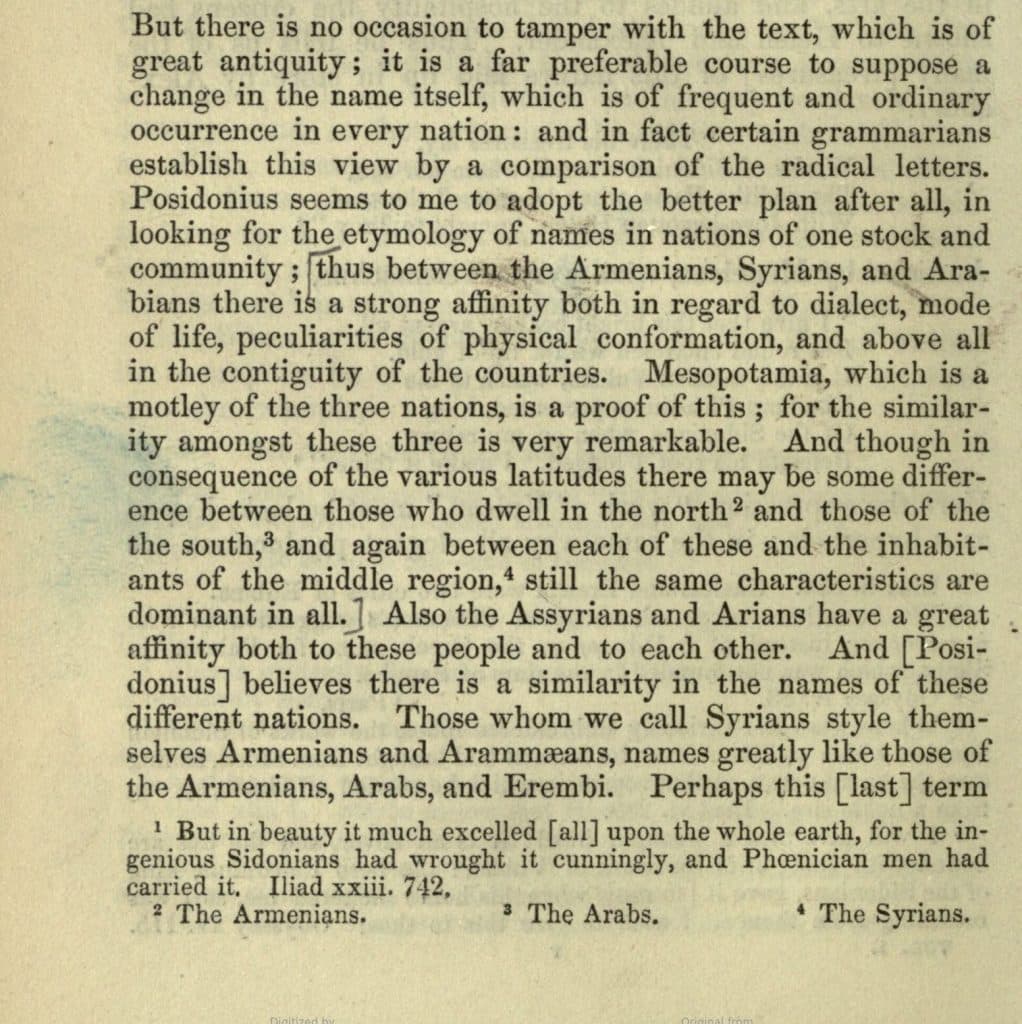
"Poseidonius conjectures that the names of these nations also are akin; for, says he, the people whom we call Syriacs are by the Syriacs themselves called Arameans."
Explore the historical continuity of our people: Aramean Timeline →
 Arameans
"Poseidonius conjectures that the names of these nations also are akin; for, says he, the people whom we call Syriacs are by the Syriacs themselves called Arameans."
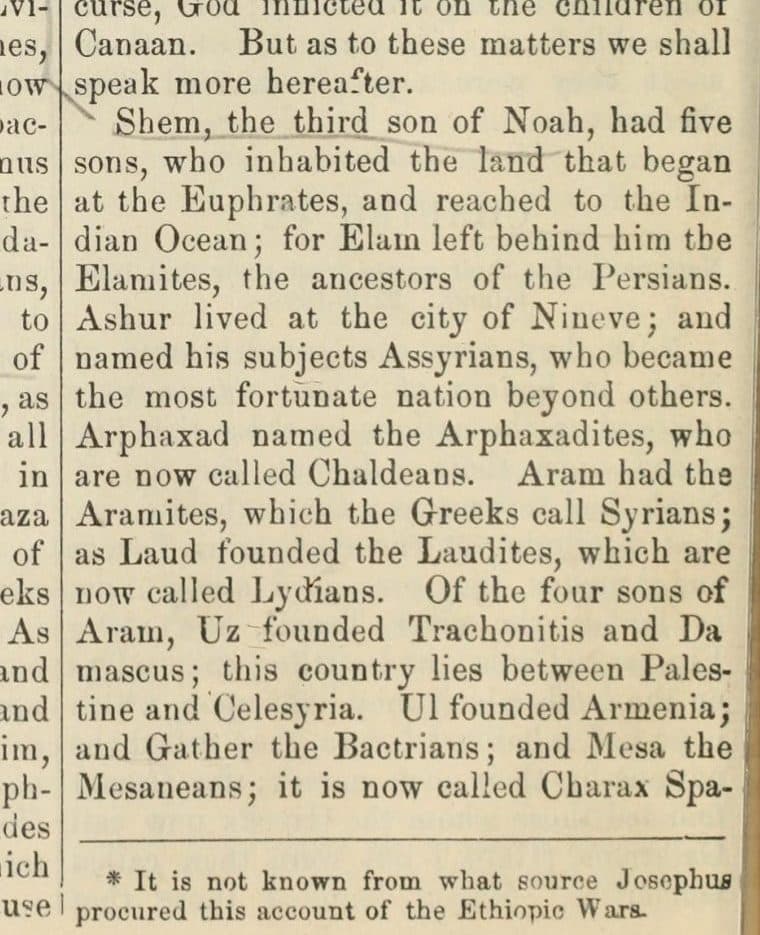
"Aram had the Arameans, which the Greeks called Syriacs."
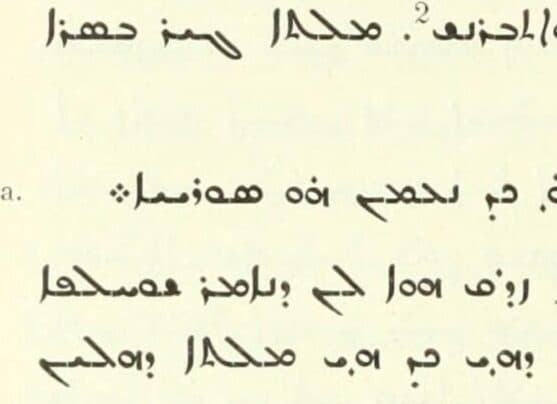
“When Naaman the Syriac (Suryoyo) […]” As is written and recognized in both the Bible and scholarship, Naaman was the commander of the army of Aram and therefore an Aramean. Saint Severus of Antioch renders Aramean as “Syriac (Suryoyo),” equating the two and showing that Syriac and Aramean are synonymous.
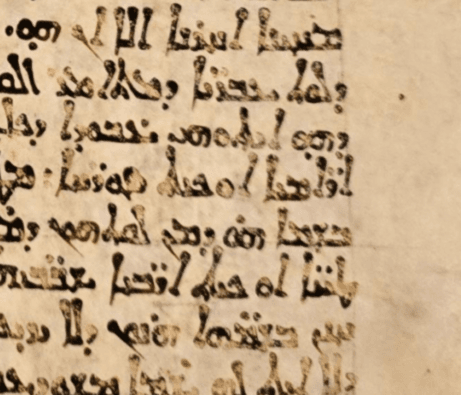
“Likewise, we Arameans, that is to say Syriacs, because of our closeness and our nearness to them and of our language in relation to their language, have imitated the name which comes from them and have called Aloho the author of the universe. And in the same way, in their turn, the Tayoye, that is to say the Arabs, their neighbors, have called him Allah.” Saint Severus of Antioch self-identifies as an Aramean and equates this with Syriac (Suryoyo), saying, “we Arameans, that is to say, Syriacs.”
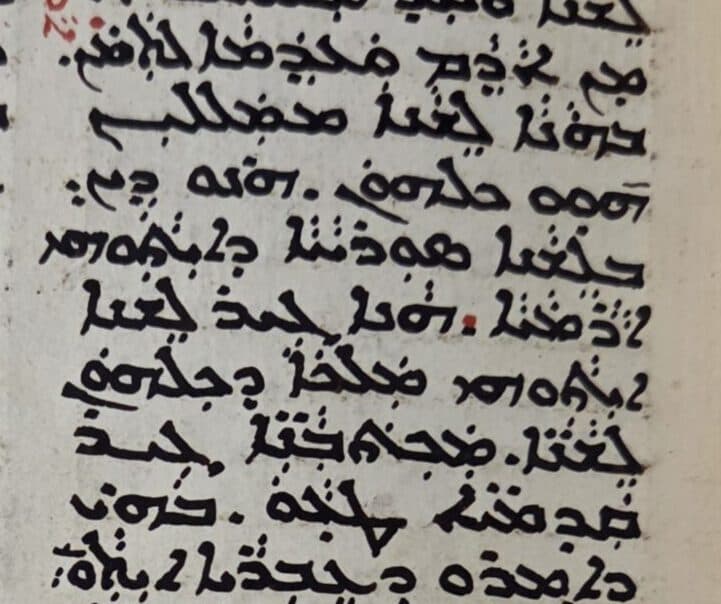
"From Adam until the present time they were all of one speech and one language. They all spake this language, that is to say Syriac, which is Aramaic, and this language is the king of all languages. Now, ancient writers have erred in that they said that Hebrew was the first [language], and in this matter they have mingled an ignorant mistake in their writing. For all the languages that are in the world are derived from Syriac, and all the languages in books are mingled with it."
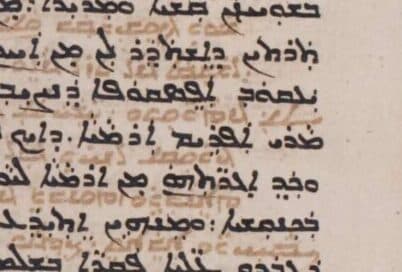
 Anonymous (East Syriac Canonist)
"While we were not yet comforted in this grief of ours, a fresh, evil blow was struck against our severe, bitter wound through the reading of those two letters sent to us by our brother, the holy Mor Jacob, the Bishop of Nisibis, and the holy Mor Ephrem the Aramean, who has appeared in our generation like a prophet. When their letters were translated from Aramaic into Greek and read aloud in the assembly, we received word from them of the crime which raging deceivers had committed with the consent of consecrated men who had been named bishops by you." This work, titled "The Synodical letter that the Western Fathers wrote to Mar Papa catholicos" (Syriac Corpus #692), is an anonymous piece of East Syriac canon law literature belonging to a larger dossier known as The Letters of Papa bar Aggai. While the text traditionally claims to be a 4th-century synodical letter written by prominent "Western" Byzantine bishops to defend Patriarch Papa against an internal rebellion, modern scholarship has proven it is a pious forgery (pseudepigrapha) created in the late 5th or early 6th century. The true author, an anonymous East Syriac church lawyer, fabricated this correspondence to create an ancient and authoritative precedent. The goal was to legally secure the absolute supremacy of the See of Seleucia-Ctesiphon over rebellious local bishops. The text contains major chronological errors, such as depicting an adult Mor Ephrem (d. 373) writing letters during a conflict that occurred around 315 AD. Strikingly, the text refers to him as "Mor Ephrem the Aramean" rather than using "Suryoyo" (Syriac), which is his standard historical identifier. This terminology further proves the historical synonymosity between the terms Suryoyo (Syriac) and Oromoyo (Aramean) in early church literature.
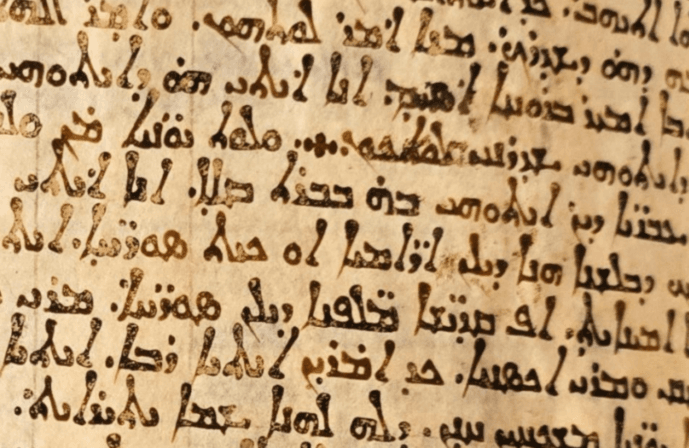
"And among the Greeks and among us, this is indeed the very name as it is expressed; but among the Hebrews, it is properly rendered as: 'I am Yéhyéh; Yéhyéh has sent me to you.' And it is translated into our language—that is, that of us Arameans, who are Syriacs—as 'the Being.' Indeed, we find that our holy Syriac teachers—Mor Ephrem, Mor Jacob, Mor Isaac, and Mor Philoxenus—also constantly call God by this name, saying 'the great Being,' 'the hidden Being.' Likewise, we find that the holy Greek teachers also consider it proper to use this name above all others when speaking of God, in preference to other names."
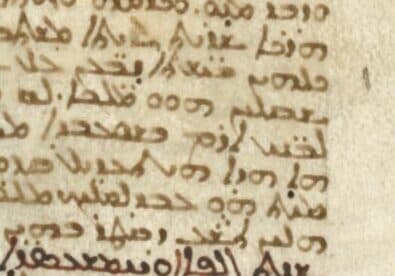
"The year one thousand and three: ‘Abd-al-Malik made a “census (ta‘dil) among the Syriacs. He issued a swift decree stating that every person must go to his country, village, and paternal house to register his name and that of his father, as well as his vineyards, olive trees, cattle, children, and all that he owned. From this time, the “poll-tax” began to be levied on the male heads, and all the calamities began to emerge against the Christian people. Previously, kings used to levy tribute on land, not on men. From this time onward, the Sons of Hagar began to reduce the Sons of Aram to Egyptian slavery. But woe unto us! Because we sinned, the “slaves” ruled over us! This was the first census (ta‘dil) the Arabs had made." In the passage, it first says that ‘Abd al-Malik made a census “among the Syriacs” and later that the “Sons of Hagar” began to reduce the “Sons of Aram” to slavery. Such wording shows “Syriacs” and “Sons of Aram” are used for the same people, the native Syriac speaking Christian community descended from the ancient Arameans.
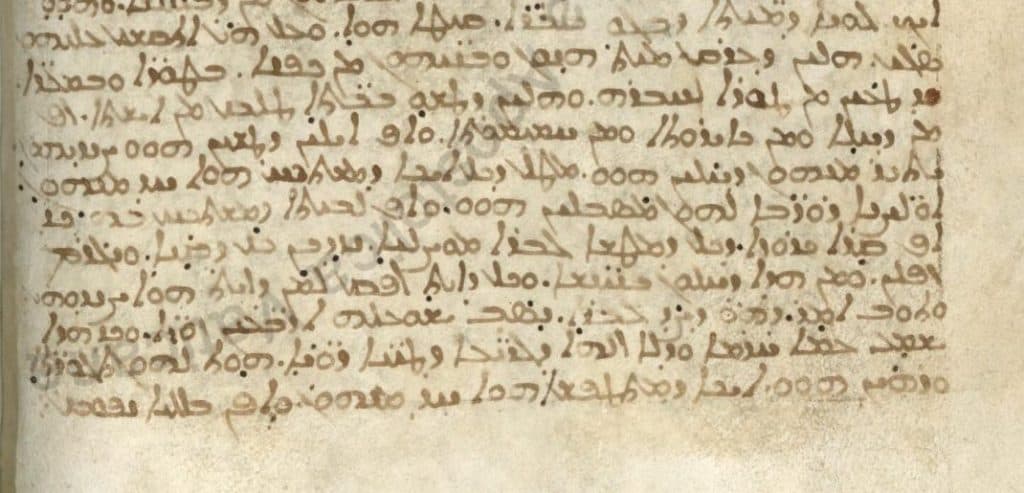
"Because this man was so cunning and crafty, no place in which someone hid any object escaped his attention, as if that very object had been calling him, saying: “Here I am! I belong to so and so!” He was aware of everything as quickly as the one who hid or put away an object, and everything was revealed to him, as is written about the Son of Perdition. As for the people who married (Syriac) women, sired Syriac children, and mixed with the Syriacs, and whom no one was able to distinguish from the Arameans, he quickly found out about them." In 769–770 CE, the Abbasid governor’s agents hunted down fugitives from Mosul hiding in villages across the Jazira. Some were Muslim Arabs who had married local Christian women, fathered children, and lived among the Syriac-speaking Christian population so long that they were outwardly indistinguishable from the Arameans (here meaning Syriacs). Despite this, the governor identified them, seized them, and confiscated their property. Amir Harrak notes: Arameans here is synonymous with Syriacs (Syriac-speaking Christians; see the note on p. 225 n. 1 above). The men in question may have been Muslim Arabs who had married Christian women.
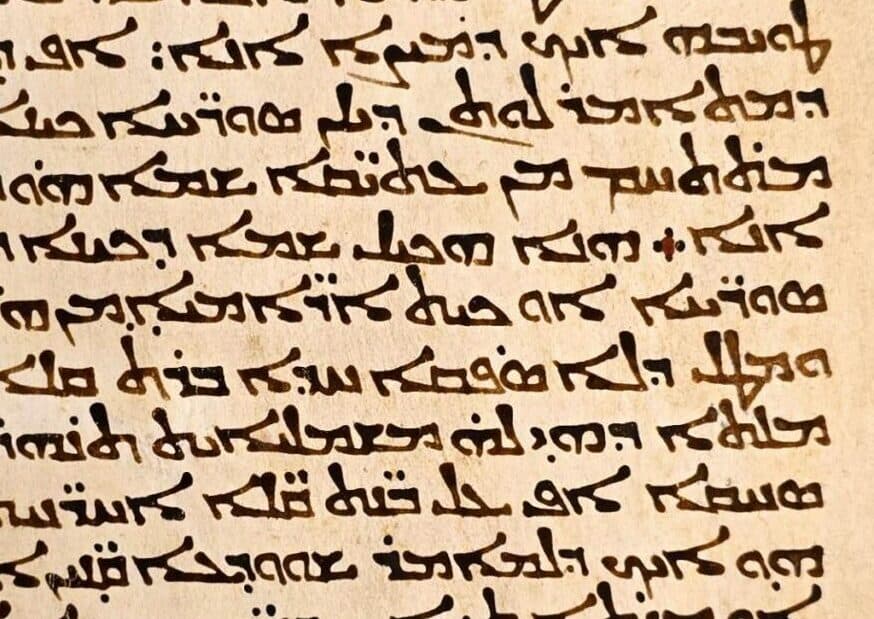
 Mor Jacob of Edessa
“So then, this noun kyōnō, as we Syriacs—that is, Arameans—express it, is derived from [the word meaning] “natural/capable” (m’eḳan). And because a single term or word does not suffice to elucidate and explain it thoroughly, but [rather] one must make use of further expressions that have, so to speak, the same meaning, either wholly or in part, [for this reason] we shall express it also by means of [some] other terms, in order to demonstrate just what the meaning of the expression is. We say of something that it is m’eḳan to mean that it is appropriate or well-adapted. People customarily say that something has a certain appropriateness in some way or other, and is well-adapted and properly constituted (kuyyōnō). So let us define meḳan as [meaning] appropriate, well-adapted and properly constituted (kīn), such that by means of all of these terms, we may discover what is the usage and the etymology of this word kyōnō, insofar as it is [used] in our language.” About the term "nature," Mor Jacob of Edessa mentions his people being Syriac-Arameans.
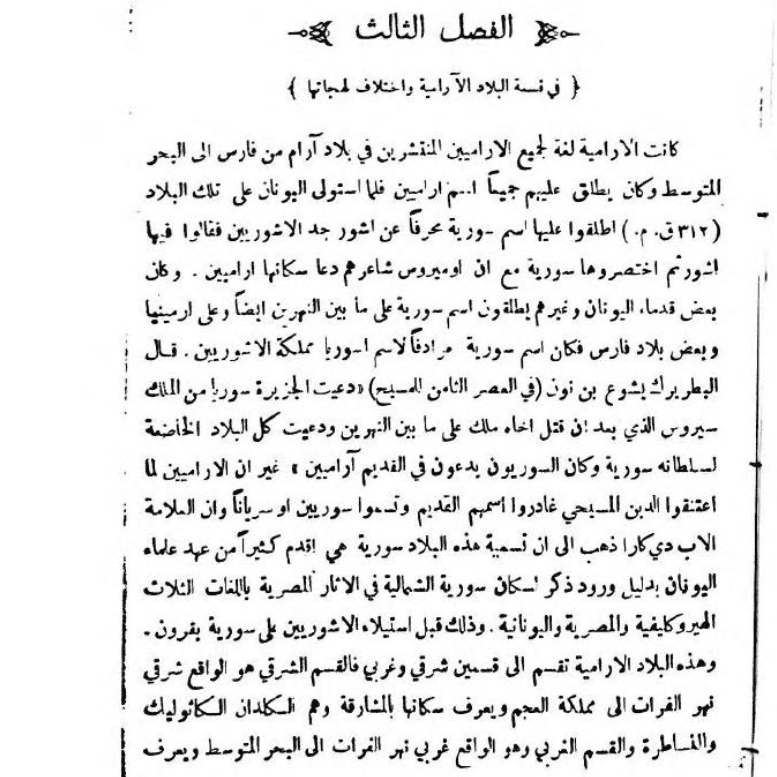
"The Patriarch Joshua bin Nun said in the eighth century of Christ that the land was called Syria by king Suros who after killing his brother became king over Mesopotamia and all the countries subject to his rule were called Syria. The Syriacs were called Arameans in ancient times, but when the Arameans embraced Christianity they abandoned their ancient name and were called Syriacs. We know that the Aramean language in which Abraham spoke was the Syriac."
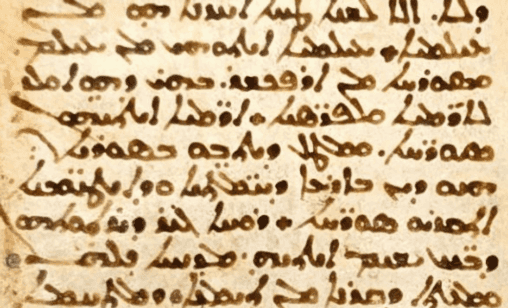
"Arameans are Syriacs, and because they dwelt in Syria, that is, in the land of the inhabitants of Hama and Antiochenes, they were called Syriacs."
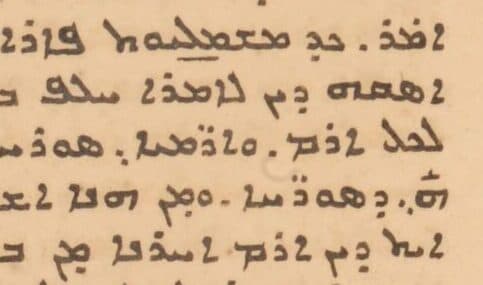
"The Greek translation [the Septuagint] calls always Aram and Arameans ‘Syriac’. Consequently, Aram becomes the father of the Syriacs. And from this name (of Aram), those living in Mesopotamia were called ‘Arameans’."
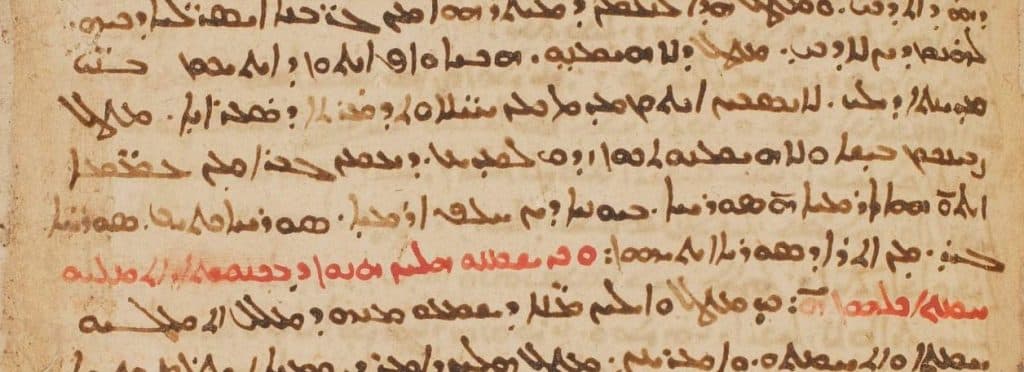
"And know this: Naaman, a man from the nations, was an Aramean, in Greek, instead of Aramean it is written Syriac." An astonishing passage from Moses bar Kepho (d. 903) hits two birds with one stone and debunks two claims against the Arameans. First, it refutes the claim that Aramean means pagan by distinguishing ܥܡ̈ܡܐ (nations, Gentiles) from ܐܪܡܝܐ (Aramean). Second, it equates Suryoyo (ܣܘܪܝܝܐ) with Aramean. Naaman was thus described as a Gentile/pagan Aramean, that is, a Syriac.
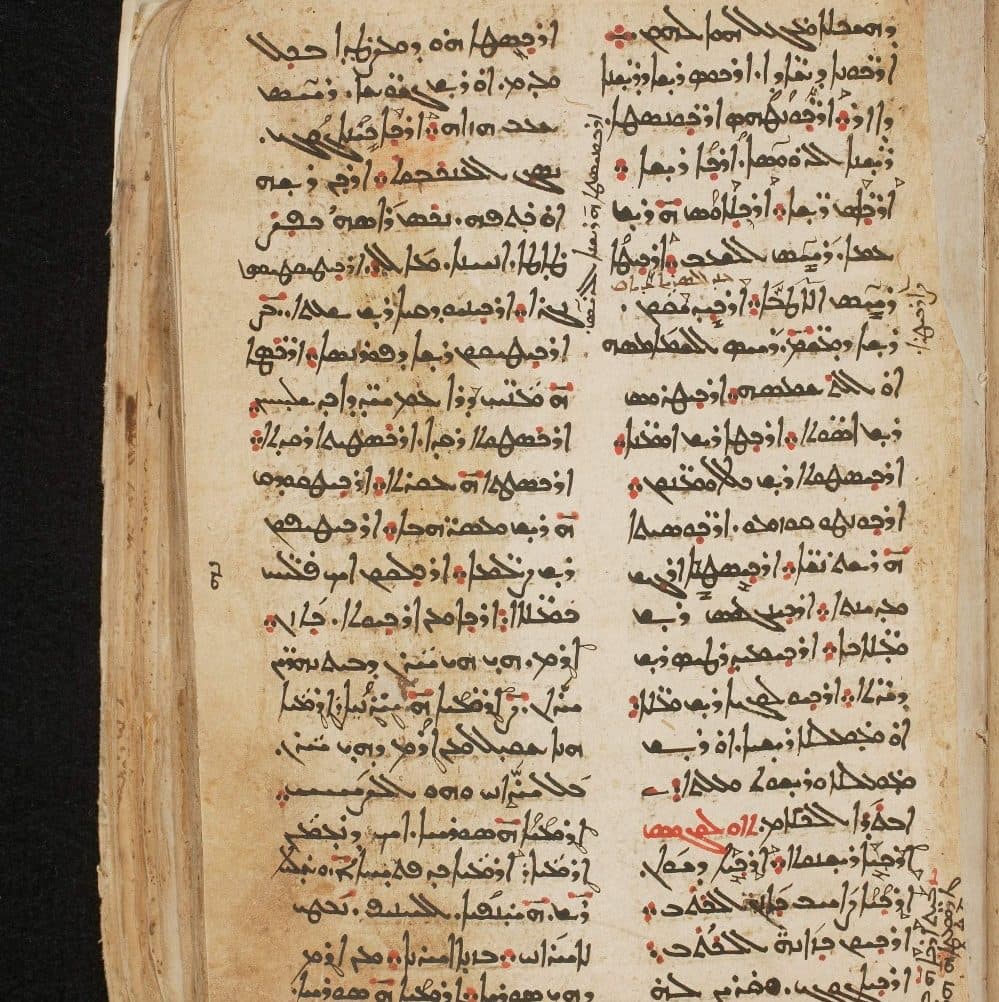
In his lexicon, Isho Bar Ali, a 9th century member of the Church of the East, gave definitions of the terms Syriac and Aramean; here is a corrected translation, with clean punctuation: “Aram is Haran in Mesopotamia. Arameans are the Syriacs, as Naaman was an Aramean. ‘Oromoyo’ (Aramean), when the resh (ܪ) is open (Ormoyo), means a worshipper of idols, a pagan; ‘Nabataean’ in another sense. In another sense, from Aram, which is Syria, ‘Oromoyo’ is ‘Suryoyo’ (Syriac); and again from Aram, which is Haran, the ancient city of idolaters.” “Ormoyo” (ܐܳܪܡܳܝܳܐ) in Syriac can denote a pagan by pronunciation and context, specifically when a vowel is missing or the resh is read “open,” yielding a form like ܐܳܪܡܳܝܳܐ instead of ܐܳܪܳܡܳܝܳܐ. Bar ʿAli carefully distinguishes Aramean from pagan on the basis of that vowel; the former is an ethnonym, the latter a religious label that can arise from pronunciation. He even adds that in another sense the word can mean Nabataean. Isho Bar Ali also equates Aram with Upper Mesopotamia concentrated around Harran, which he identifies with Paddan-Aram (“the field of Aram”) in the Bible. Harran lies just below Urhoy (Edessa), about 206 kilometers west of Mardin and the Tur Abdin region. This reflects a geographical understanding of Aram as the northern Mesopotamian plain that served as the heartland of the ancient Arameans. He then closes by defining Aram as Syria in the Greek rendering, which explains how Aramean (Ormoyo) yields Syriac (Suryoyo). Finally, he returns to his first regional definition, identifying Aram with the Harran-centered zone of Upper Mesopotamia. In summary, Isho Bar Ali teaches that Aramean means Syriac, irrespective of location, because Aram came to be rendered as Syria/Syriac in Greek. At the same time, he defines Aram geographically as the region of Upper Mesopotamia concentrated around Harran, the ancient “field of Aram.”
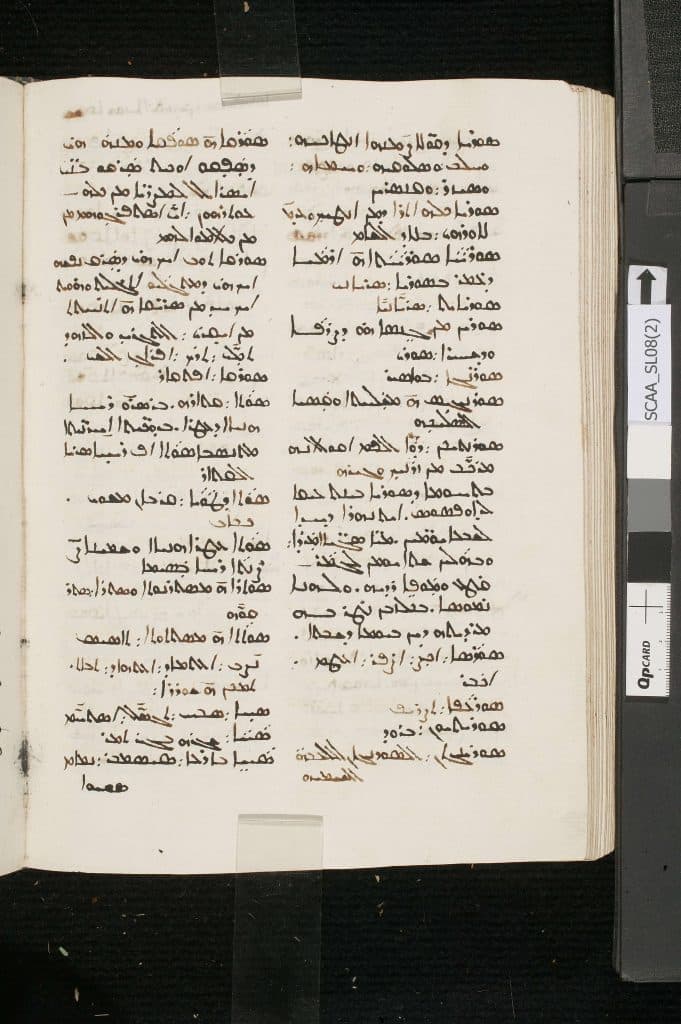
“Syria includes Antioch, Aleppo, Seleucia (the port al-Suwaydiyya near Antioch), Hama, Shaizar, and Qinnasrin.” He further says that “Syria is all the country from Antioch to Edessa, Bilad al-Sham.” In the same lexicon, he says an Aramean is a Syriac from Sham. Sham is Antioch as well as Edessa, so the Syriac Christians of Edessa (Saint Ephrem the Syrian, Saint Jacob of Edessa, etc.) are considered Arameans per Bar Bahlul’s definition.
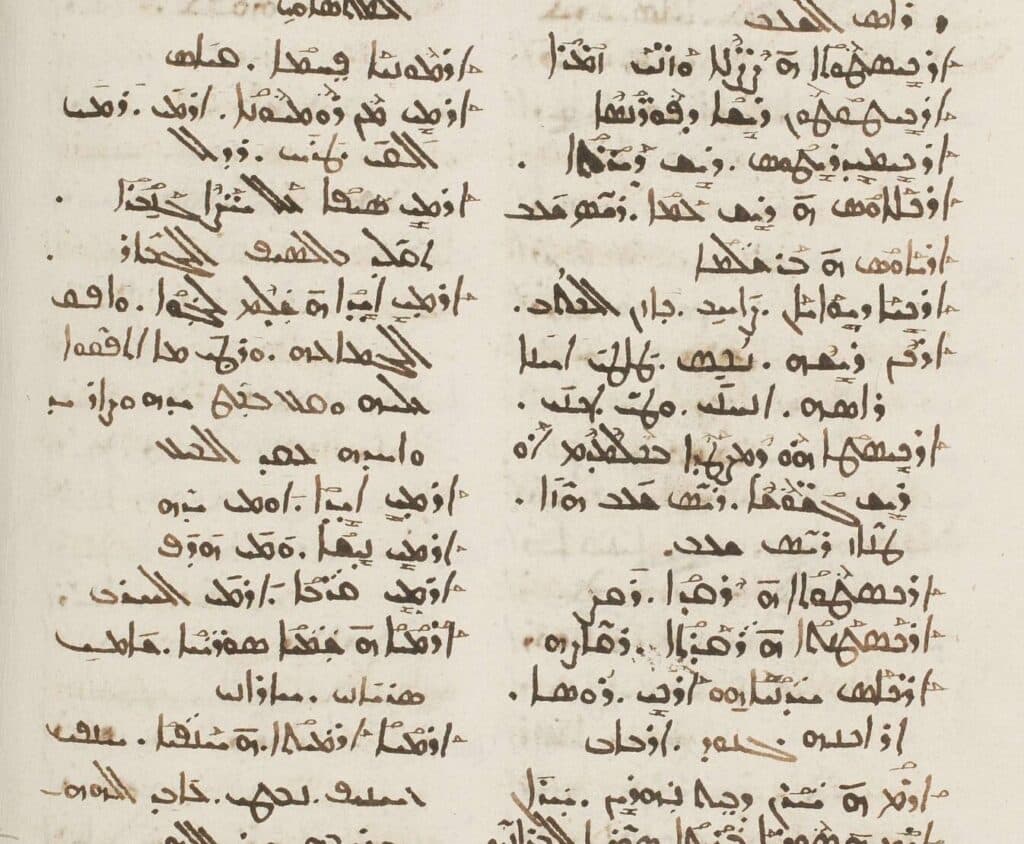
“Aramean (Oromoyo): a Syriac from Sham. Armaya: a pagan." As we can see, there is a difference between Armaya and Aramaya (Aramean and Syriac). Not only does this disprove the claim that "Aramean" means pagan, since there is a vowel distinction between the two, but it also shows that Aramean and Syriac are synonymous.
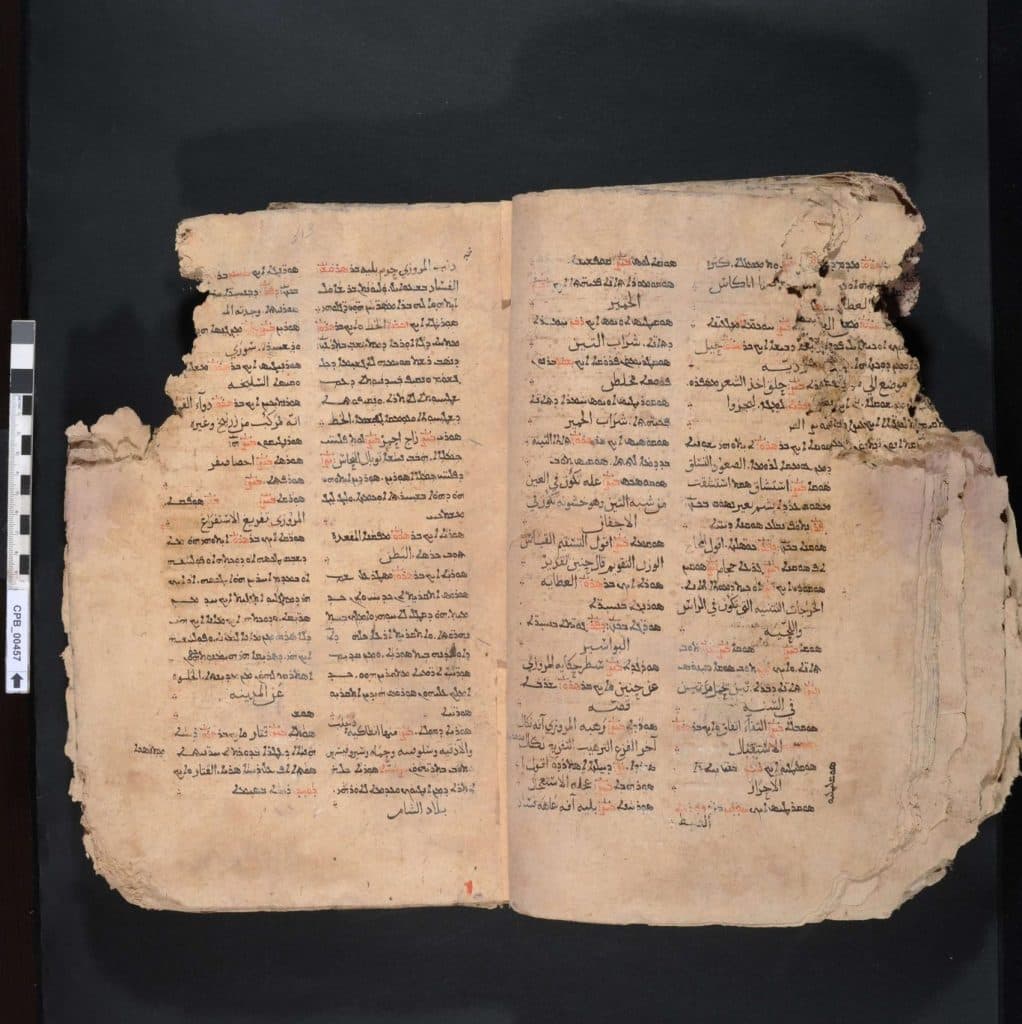
"Syria was derived from Suros, either during his lifetime or after his death. This Suros had killed his brother and ruled over Mesopotamia. His whole kingdom was called Syria. The Syriacs were formerly called Arameans, but when Suros ruled over them, from then on they were called Syriacs."
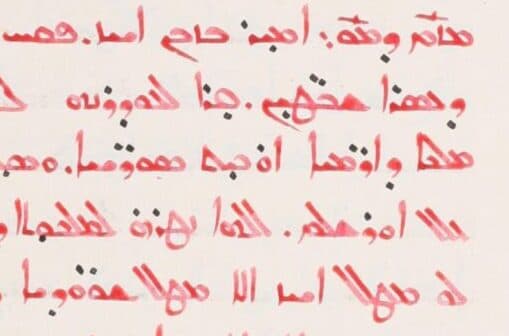
Pekah, the king of the ten tribes, called to his aid Rezin, the king of the Arameans, that is, the Syriacs (Suryoye), and they went up against Jerusalem. God protected the kingdom of Judah, not because of Ahaz, but because of the promises made to David. Here, Bar Salibi again uses Suryoye (Syriacs) and Oromoye (Arameans) as synonyms, further proving their synonymity.
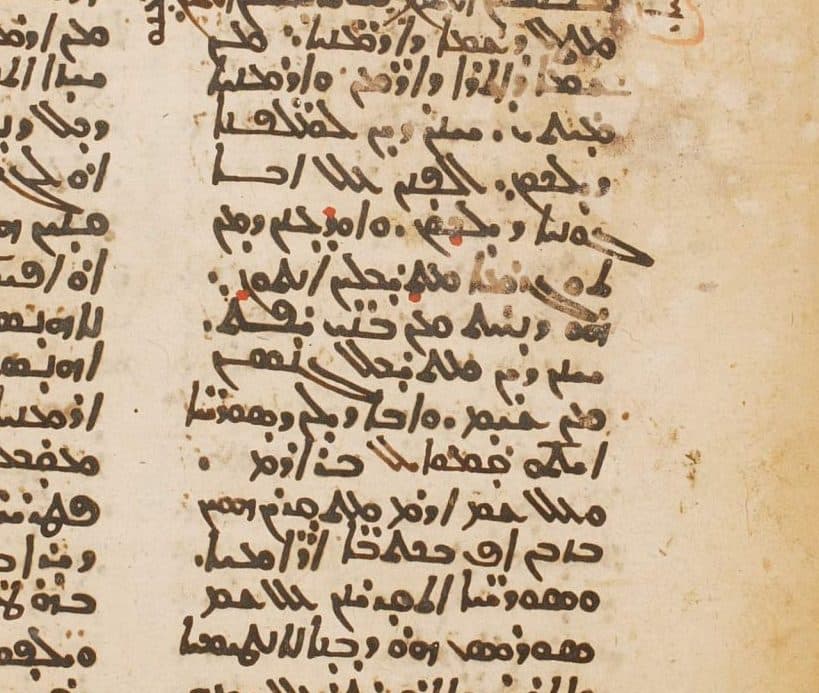
"The Armenians say, From whom do you descend, you who are Syriacs by race? Against them we will say, Neither do you know from whom you descend. The name Armenian is derived from Armenian, which is the name of a country, not of a person. It is we, the Syriacs, who have enlightened your authors and revealed to them that you descend from Togarma, one of the children of Japheth. As for us Syriacs, we descend from Shem, and our father is Kemuel, son of Aram; from this name, Aram, we are sometimes called in the Books by the name Arameans. We are called Syriacs after Syrus, who built Antioch and its district, and the country was named after him, Syria."
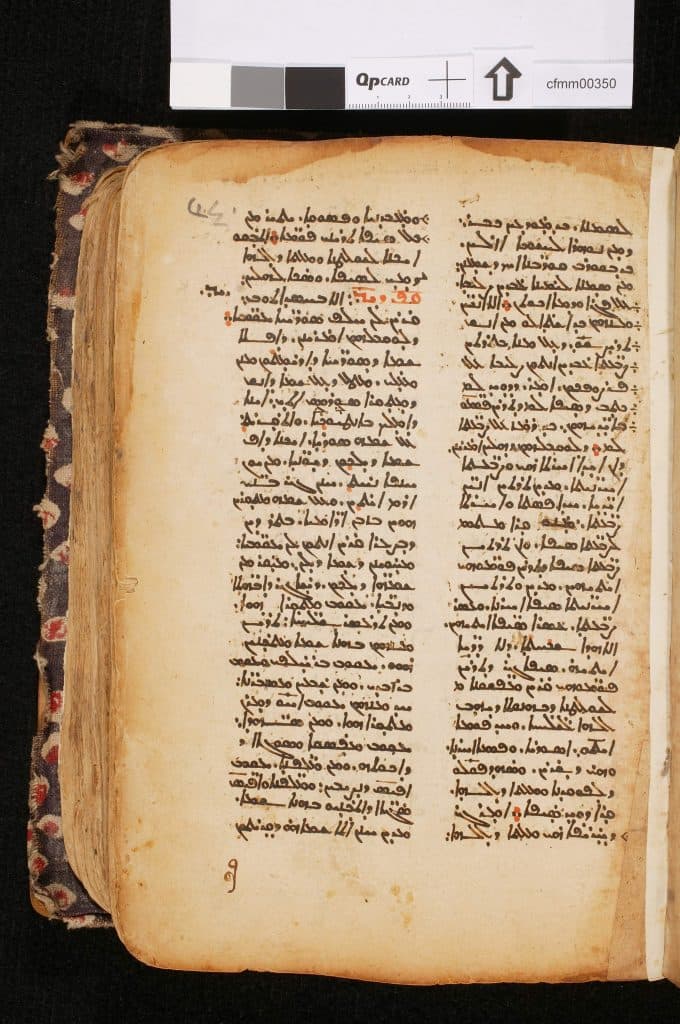
"Because of their hatred, they (the Greeks) call us Jacobites instead of Syriacs. In response, we say that the name Syriac, which you have taken from us, is superior, for it comes from Syrus, who ruled over Antioch, and the land was named Syria after him—just as your name, Greek, comes from Javan the pagan. However, we are the descendants of Aram, and in ancient times, we were called Arameans after his name."
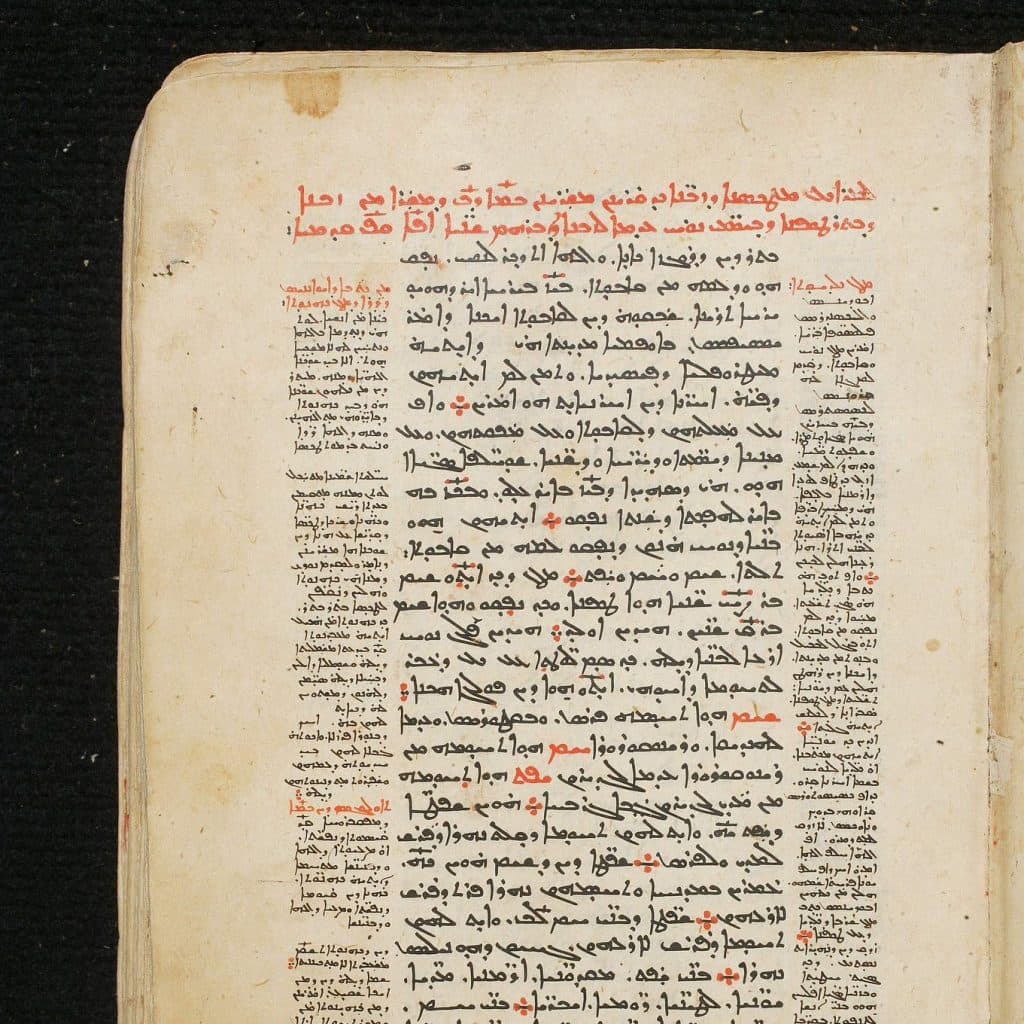
He lists in his world chronicle the children of Shem: "The children of Shem are the Assyrians, the Chaldeans, the Ludians, and the Arameans, who are the Syriacs, the Hebrews, and the Persians."
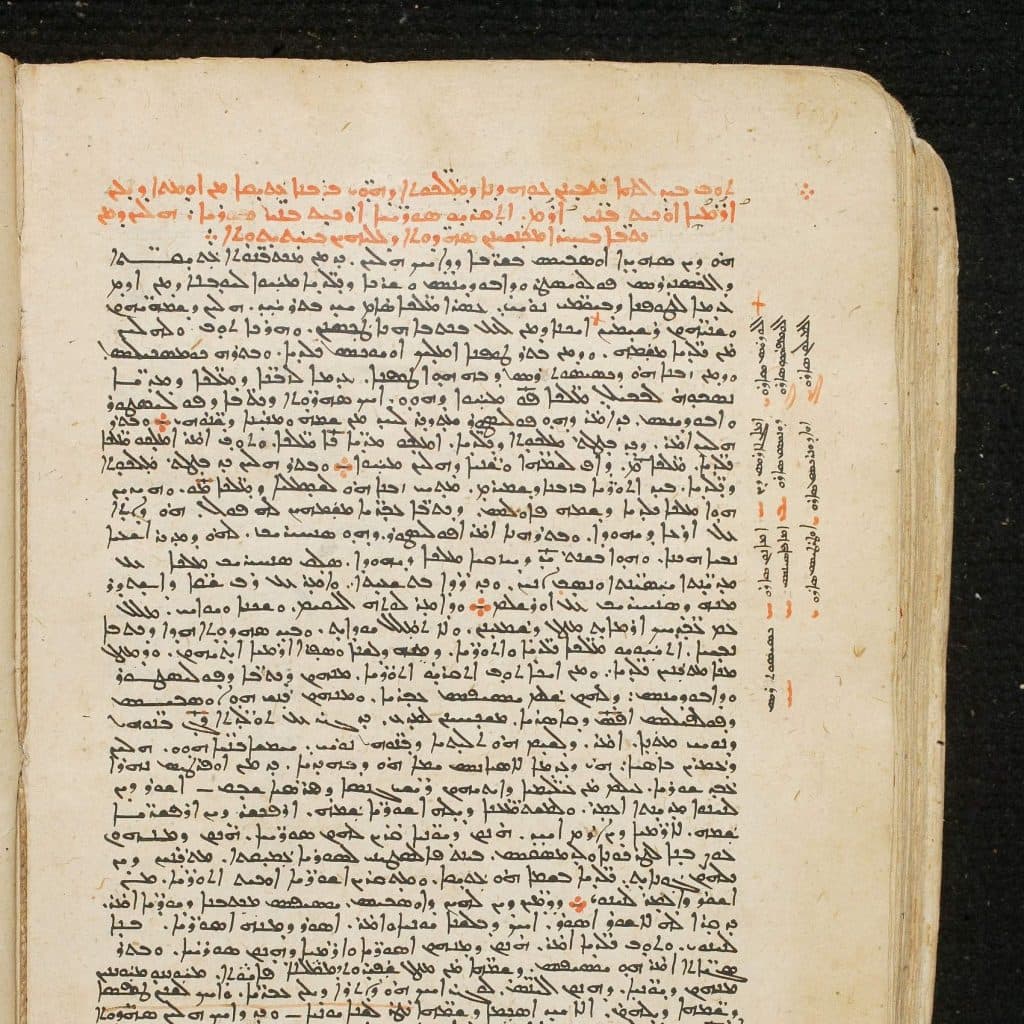
”The kingdoms which have been established in antiquity by our race, (that of) the Arameans, namely the descendants of Aram, who were called Syriacs." "Arameans controlled the land of Aram, and they are called Syriacs by the Greeks." "Eusebius agrees with that of Josephus, the Jewish historian who said that Ashur from whom descended the Assyrians is the one who built Nineveh. He also said that, 'The Chaldeans from whom are the Assyrians and the Arameans, they are the Syrians.'"
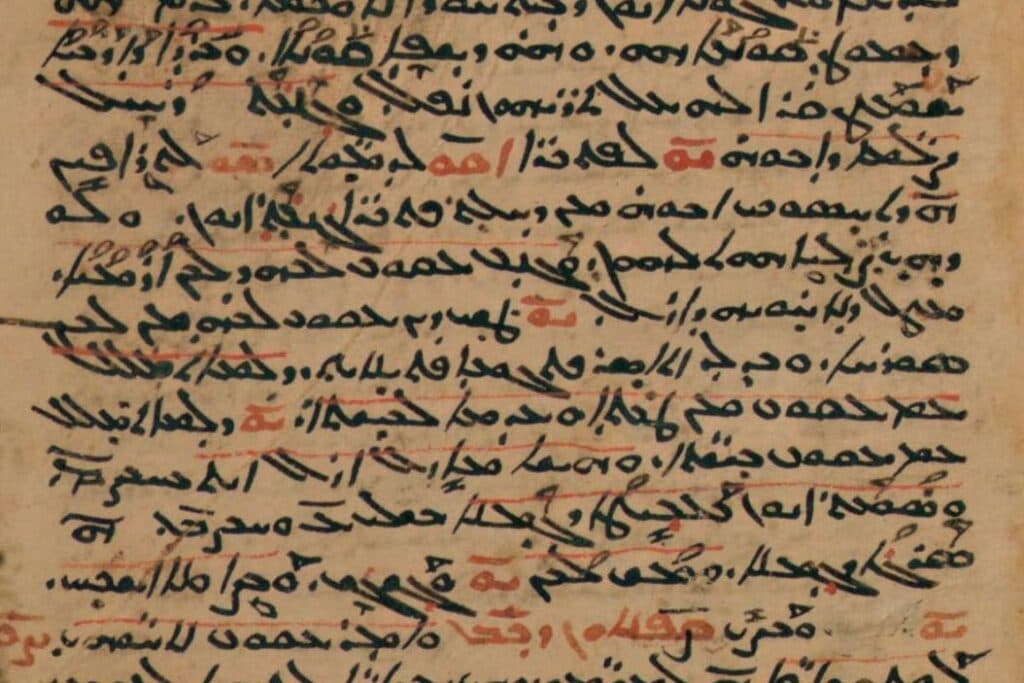
"And Jacob stole the heart of Laban the Aramean, because he told him not that he was going." Greek: Jacob, however, hid his heart from Laban the Syriac." Bar Hebraeus records “Laban the Aramean” in the Syriac Peshitta and gives the Greek equivalent “the Syriac,” expressed in Aramaic as “Suryoyo,” treating the two as synonymous.