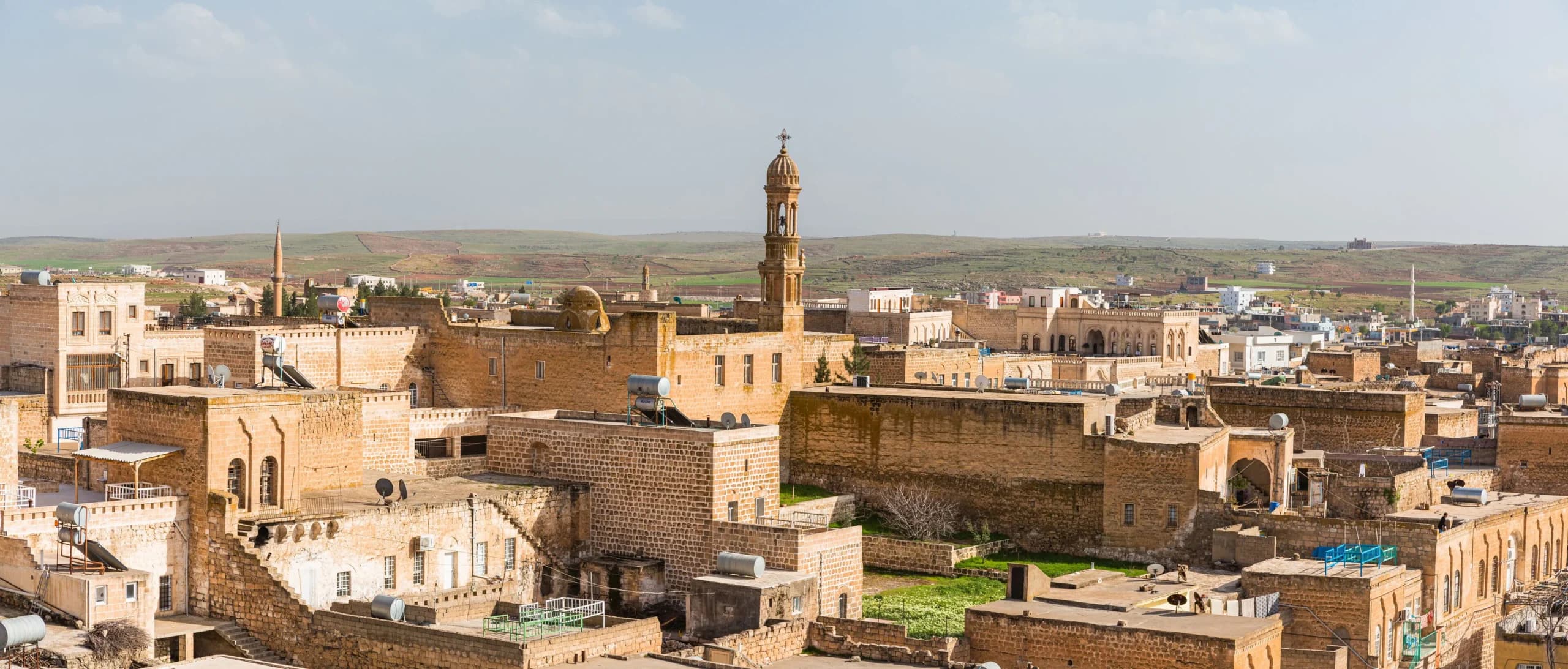
The ancient lands of Tur Abdin, a historic cradle of Aramean civilization in southeastern Turkey, have long been characterized by a unique and resilient social fabric. At its heart lies a sophisticated system of clans and families that has preserved identity, heritage, and social cohesion for centuries. Drawing upon traditional lineage and community memory, we can explore how these intricate relationships formed the bedrock of Aramean Christian (Syriac) society, both in rural villages and in bustling urban centers.
From Patriarch to People: The Foundational Lineage
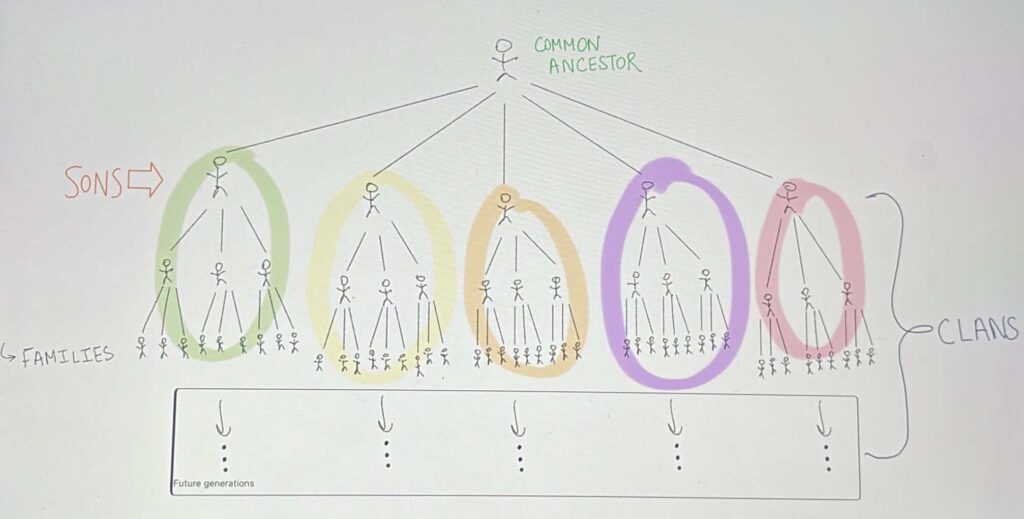
At the core of Aramean social organization is the concept of a shared ancestry, typically tracing back to a single, foundational figure.
1. The Common Ancestor (The Root)
Every story begins with a root. In Tur Abdin, this is the Common Ancestor; a revered patriarch, often a legendary or historical figure, who first settled a village or founded a prominent lineage. This individual serves as the unifying point of identity, the wellspring from which all subsequent generations flow, establishing a collective sense of belonging for everyone descended from him.
2. The Sons (The First Division)
From this common ancestor emerge his Sons. This marks the first major division in the lineage, as each son becomes the progenitor of a distinct branch of the expanding family tree. Crucially, these sons often lend their names to what will eventually become the powerful Clans of a village, laying the groundwork for its socio-political structure.
The Power of the Clan: Be (Beth)
As these initial branches grew over generations, they solidified into formidable collective units known as clans or tribes.
3. The Clans (The Collective Identity)
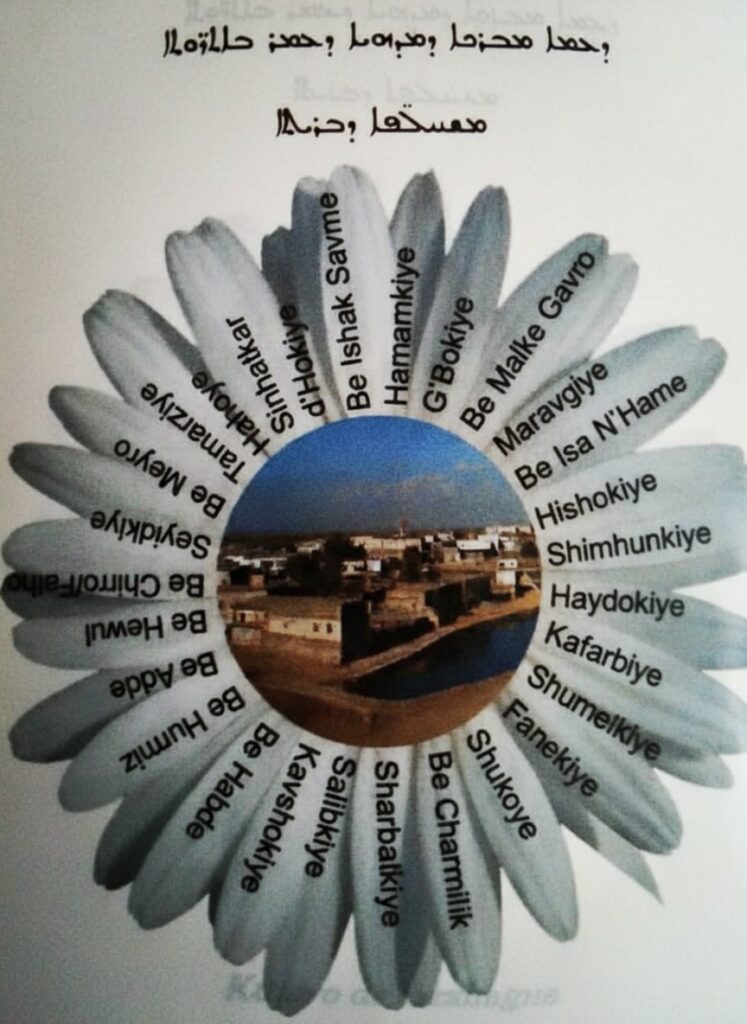
A clan or tribe—termed Sharbtho in Syriac Aramaic—is essentially a collection of numerous families, all bound by their shared descent from one of the original sons of the common ancestor. In the Aramean tradition of Tur Abdin, these clans are often referred to as "Be" (derived from the Classical Syriac Beth, meaning "house of" or "family of"). In certain bilingual or Kurdish-speaking villages, such as Hah, one can rarely hear the term "Mala" (a word of Kurmanji origin also meaning "house" or "family"). When you ask someone in Tur Abdin, "From what Be are you?" you are inquiring about their clan affiliation; a foundational pillar of their identity.
In village life, clans were far more than theoretical genealogical charts; they functioned as vital socio-political and protective units:
- Residential Quarters: Members of the same clan often lived in close proximity, forming distinct quarters or neighborhoods within the village, frequently sharing interconnected stone houses, common courtyards, and rooftops for defense and social cohesion.
- Collective Land Ownership: Clans might collectively own, work, and manage agricultural lands, vineyards, water cisterns, or grazing pastures, fostering deep economic interdependence.
- Unified Action and the Clan Chief: In times of dispute, external threat, or village projects, the tribe acted as a disciplined, unified force led by its designated tribe chief. This chief was never a mere figurehead; he was an influential leader responsible for mediating internal conflicts, negotiating with other clans or neighboring groups, representing tribes interests before ecclesiastical authorities, and guaranteeing collective defense and welfare.
4. The Families (Iqaryotho)
Within each overarching clan are the individual Families (Iqaryotho, singular Iqartho). These are the distinct domestic households, typically centered around a living grandfather or older patriarch. An Iqartho comprises parents, children, siblings, cousins, and often extended relatives living together within the same walled compound or closely associated cluster of rooms. While self-sufficient in daily domestic affairs, these families remain intrinsically bound to their broader Be, sharing its honors, responsibilities, and communal ties.
5. Future Generations (The Living Legacy)
This entire structure is not a static relic of antiquity, but a dynamic, living legacy. The continuum of Future Generations highlights that this process of organic branching and growth continues to this day. Lineages continue to produce new households, sub-branches evolve into their own identities, and the social fabric of Tur Abdin adapts across time and into the diaspora, while keeping its ancestral foundation intact.
Surnames, Patronyms, and Lineage Formulas: A Shifting Landscape
A common misconception is that all members of an ancient clan or tribe historically carried one uniform surname. In Tur Abdin, this was never the case. Before the 20th century, individuals were identified through descriptive patronymics, matriarchal identifiers, and multi-tiered clan formulas that mapped their precise place within the community hierarchy.
Patronymic and Matriarchal Lineage Names
Historically, individuals were most commonly identified by their patronymics (e.g., "Shmuel son of Ya'qub") or by compound ancestral designations (e.g., "Gabriel Shem'un dBe Haydo"). Different families within the same vast clan frequently held distinct descriptive names, honorific titles, or craft-based monikers.
- Matriarchal Names (Metronyms): Although lineage names are predominantly patrilineal, it was also quite common for clans and tribal groups to derive their names from a prominent female ancestor. These were often the mothers of a founding patriarch or wives remembered across generations for their influence, strength, and renown. A notable example is the Khazmokiye, a prominent tribal group found across villages such as Azekh, Anhel, and Beth Qustan, whose name derives from an influential female ancestor named Khazmo.
Traditional Naming Structures in Action
In daily life and local records, compound formulas tied the individual directly back through both their immediate household branch and their broader tribe:
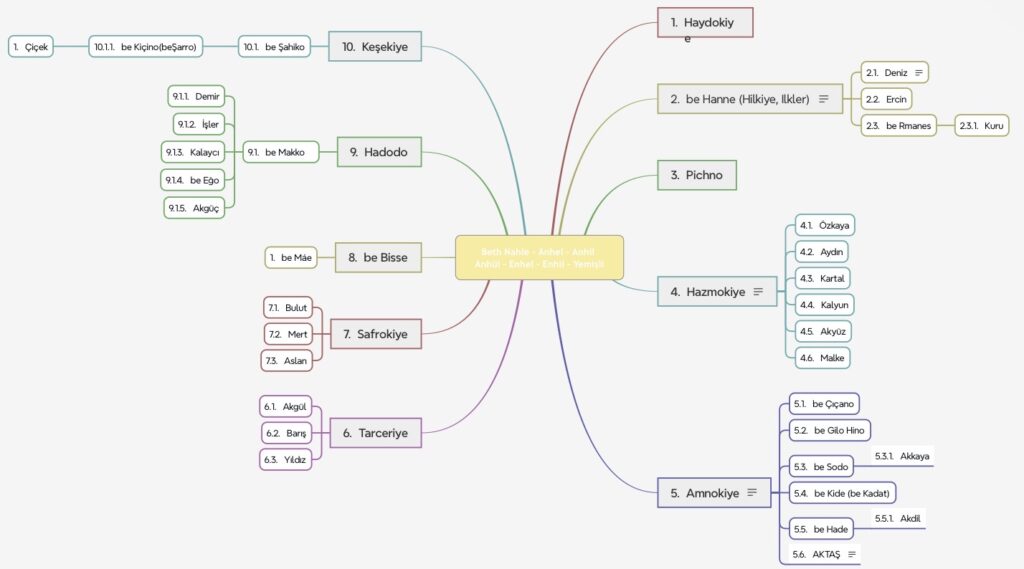
- Anhel Example: Ishu' (dBe) Makko dBe Hadodo
- Ishu': The individual's given name.
- Makko: His immediate family branch or clan (Iqartho).
- Hadodo: The overarching tribe or primary clan (Sharbtho).
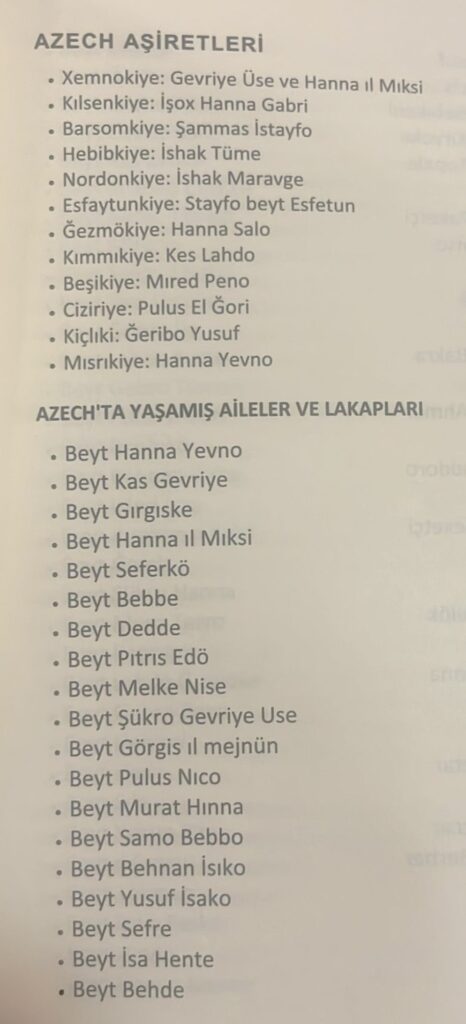
- Azekh Example: Gabro (dBe) Shukro Gawriye Use Amnokiye
- Gabro: The individual's given name.
- Shukro Gawriye Use: The direct generational and household lineage branch (Iqartho).
- Amnokiye: The broader, historical tribe to which the lineage belongs (Sharbtho).
Diversity Within Unity
Historical evidence, such as the patriarchal dues registries of the 1870s—demonstrates that distinct branches within a single recognized Be had their own separate informal surnames, titles, and lineage markers long before modern identity laws. Clan unity coexisted naturally with internal family diversity.
Rupture, Displacement, and the Transformation of Aramean Surnames
The twentieth century brought severe disruptions to the ancestral naming customs of the Arameans. Across both their native soil in Tur Abdin and the refuge communities established across the Levant, political mandates, ethnic persecution, and forced migrations radically reshaped how Aramean families were officially recorded and perceived.
The Turkish Surname Law of 1934: Forced Assimilation and Erasure
A critical and painful chapter in Aramean history was the state-enforced restructuring of ancestral names under modern Turkish nation-building policies:
The Living Oral Record: Despite this deliberate attempt to assimilate and erase Aramean identity, the clan framework could not be extinguished. A forced name on an official identity card or passport could not overwrite communal memory. Within their villages, across the homeland, and throughout the global diaspora, Arameans continued to recognize and identify one another by their authentic Be, proving that ancestral memory runs far deeper than administrative decrees.
Forced Imposition and Turkification: The Turkish Surname Law of 1934 was not a benign civil modernization; it was an aggressively enforced instrument designed to advance the state's official policy of Turkification and cultural assimilation.
Targeted Erasure of Heritage: By legally mandating Turkish-only surnames, the state deliberately sought to erase centuries-old Syriac Aramean names that carried the native history, language, and indigenous memory of Tur Abdin.
Fracturing of Lineages: Local Turkish registration officials frequently imposed arbitrary Turkish words, occupations, physical traits, or geographical markers. Because different households within the same clan registered at different times or before different clerks, the law created an artificial fracture: members of the exact same ancient Be often ended up with four or five completely different Turkish legal surnames.
Re-Identification: Severed Roots, the Loss of Tribal Memory in the Levant
The Sayfo genocide of 1915 and the waves of persecution that followed forced countless Aramean families to flee their ancestral villages in Tur Abdin and neighboring regions, seeking refuge across the borders of modern-day Syria and Lebanon. Displacement meant far more than the physical loss of homes and lands; it also triggered significant transformations in how families were identified and registered in foreign administrative systems. Over successive generations, these circumstances produced distinct patterns of surname formation and adaptation in each host country.
Patronymic Replacement and Regional Divergence in Syria: In Syria, the transformation of names followed two distinct geographical and historical trajectories, heavily influenced by origin, timing of arrival, and local social environment:
The Gozarto (Al-Jazira) Region: In the northeast—known historically in Aramaic as Gozarto, the vast majority of refugees were Arameans from Tur Abdin who arrived in the immediate aftermath of the 1915 genocide. Settling closely together in towns like Qamishli (from Central Tur Abdin), Al-Hassakah (originally from Mardin region), and Derik (originally from Azekh region of Beth Zabday), this population remained conservative, traditional, and preserved their native Turoyo Aramaic dialect for those who spoke it. Here, the break in names was largely administrative. Refugees were unable to record their ancient, multi-tiered clan titles (Be) or tribal structures in the newly formed state civil registries. Instead, families were forced to adopt more immediate identifiers; typically the first name of a father or grandfather who led the household back in the homeland. Centuries-old clan designations were left off state records, causing frozen new patronyms like Malke, Gawriye, Hanna, Yaqub, Marawge, Saliba, Aho, Danho, Isa, and others to become official surnames. While this preserved a link to an immediate and recent forefather, it severed formal legal continuity with deeper ancestral and tribal lineage.
Western and Central Syrian Cities (Aleppo, Homs, Damascus): Outside the Gozarto, surname adaptation was driven not just by bureaucracy, but by the urgent need for social acceptance, safety, and integration into largely Arabic-speaking urban environments. Many Arameans in these cities had arrived not only in 1915, but also in earlier waves fleeing the Hamidian massacres of the 1890s and other 19th-century anti-Christian pogroms and persecutions. Most of these refugees originated from regions outside Tur Abdin where Arameans were less geographically concentrated, such as Urhoy (Urfa/Edessa), Omid (Diyarbakir), Kharput (Elazığ), Malatya, Adana, etc. Because these outlying communities were more isolated and vulnerable, the killings there were exceptionally brutal, leaving fewer survivors. Those who managed to reach major urban centers like Aleppo, Homs, and Damascus often found themselves in an environment where blending in was essential for survival. To escape prejudice, ease business relations, and establish new identities in a different social fabric, many families actively adopted Arabic surnames or descriptive trade-based and local names, allowing their distinct and vulnerable origins to remain less visible.
Social Pressures and Integration in Lebanon: In Lebanon, surname adaptation operated within a distinct sectarian and social landscape. Arriving as an uprooted minority in an environment where established communal status carried immense social and political weight, some Aramean families faced prejudice or subtle pressure to integrate into existing societal frameworks. In certain family lineages, this prompted the adoption or phonetic alteration of surnames into forms more familiar within broader Lebanese society, including Arabic names shared across native Lebanese Christian communities like the famous surname Khouri (meaning Archpriest). Adopting these shared names softened the visible distinctiveness of a refugee background and facilitated economic and social acceptance. Rather than a conscious abandonment of ancestral roots, this was frequently a pragmatic survival mechanism in navigating a stratified society. Conversely, only a few families maintained their ancestral forms unchanged, while others mirrored the pattern seen in Syria by adopting the given name of a father or grandfather as their new hereditary surname.
Cities vs. Villages: Adapting the System
While the core lineage principles remained, the vast differences in population size, economic activity, and social dynamics meant that cities like Midyat and Mardin likely saw adaptations to this system compared to smaller, rural villages.
- Village Life: In villages, the clan system was often more overtly dominant. Physical proximity, shared agricultural practices, and a more homogenous population reinforced clan loyalties and structures, with the clan chief holding significant, often undisputed, authority. Everyone knew their Be and its relation to others.
- Urban Complexity: In cities, with their larger, more diverse populations, varied professions (merchants, artisans, clergy, laborers), and influx of people from different regions, the clan system, while still present and important, might have evolved differently:
- Residential Segregation: Even in cities, clans often congregated in specific neighborhoods or quarters (shawthotho), maintaining a sense of community and security. For example, in Midyat, known neighborhoods included i Shawtho dBe Rhawi or i Shawtho dBe Chalma.
- Beyond Kinship: Urban life introduced more opportunities for association based on trade guilds, other Christian affiliations (such as Syriac Catholics and Syriac Protestants), or professional interests, potentially diversifying social networks beyond strict clan lines.
- Political Influence: Clan chiefs in cities would still wield influence, but their power might be balanced by other urban institutions, religious leaders, or a more formalized municipal structure. The sheer number of families meant that while the Be identity was strong, daily interactions were necessarily more diverse.
- Evolving Mentalities: Urban centers naturally fostered different mentalities, often more cosmopolitan and individualistic, though the deep-seated respect for lineage and family honor remained paramount.
In essence, while the village model represents the most 'pure' form of this traditional system, the cities showed its remarkable flexibility, adapting to greater population density and socioeconomic complexity while retaining the fundamental essence of shared heritage and collective identity.