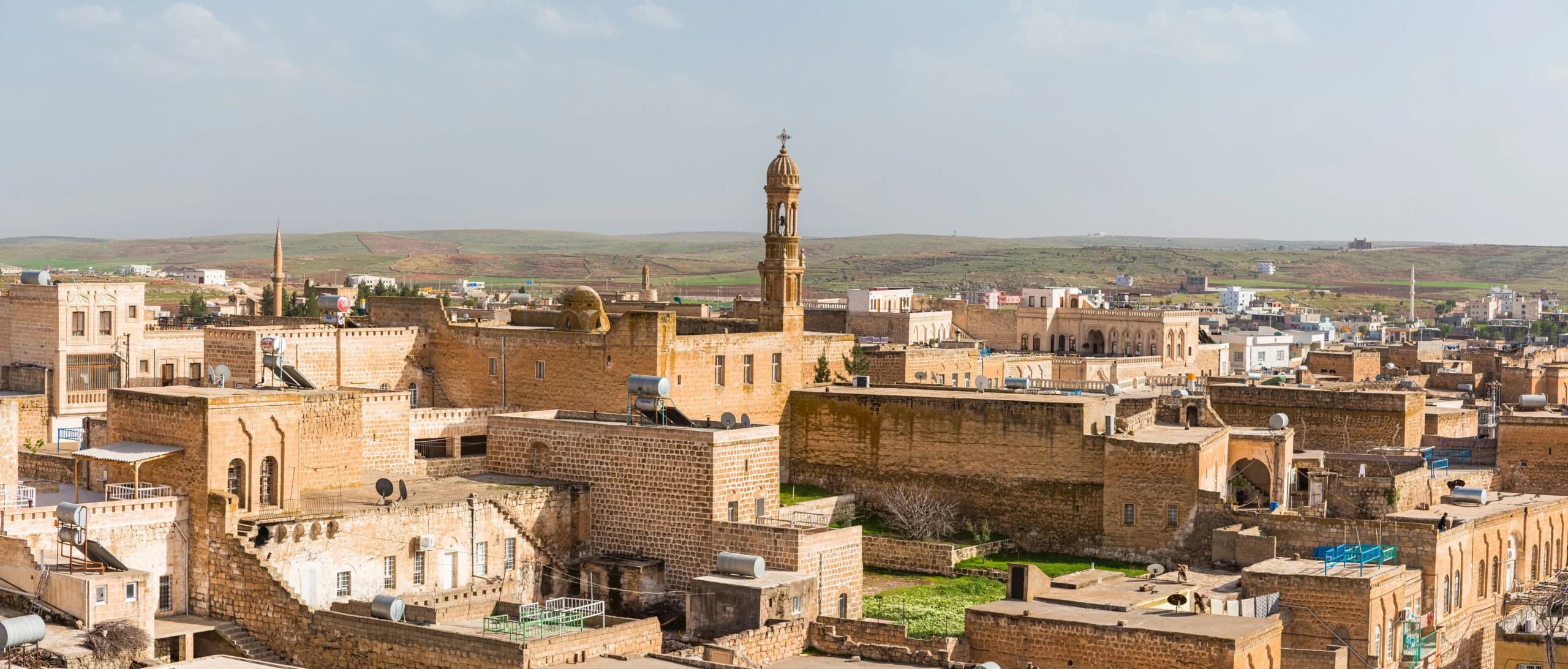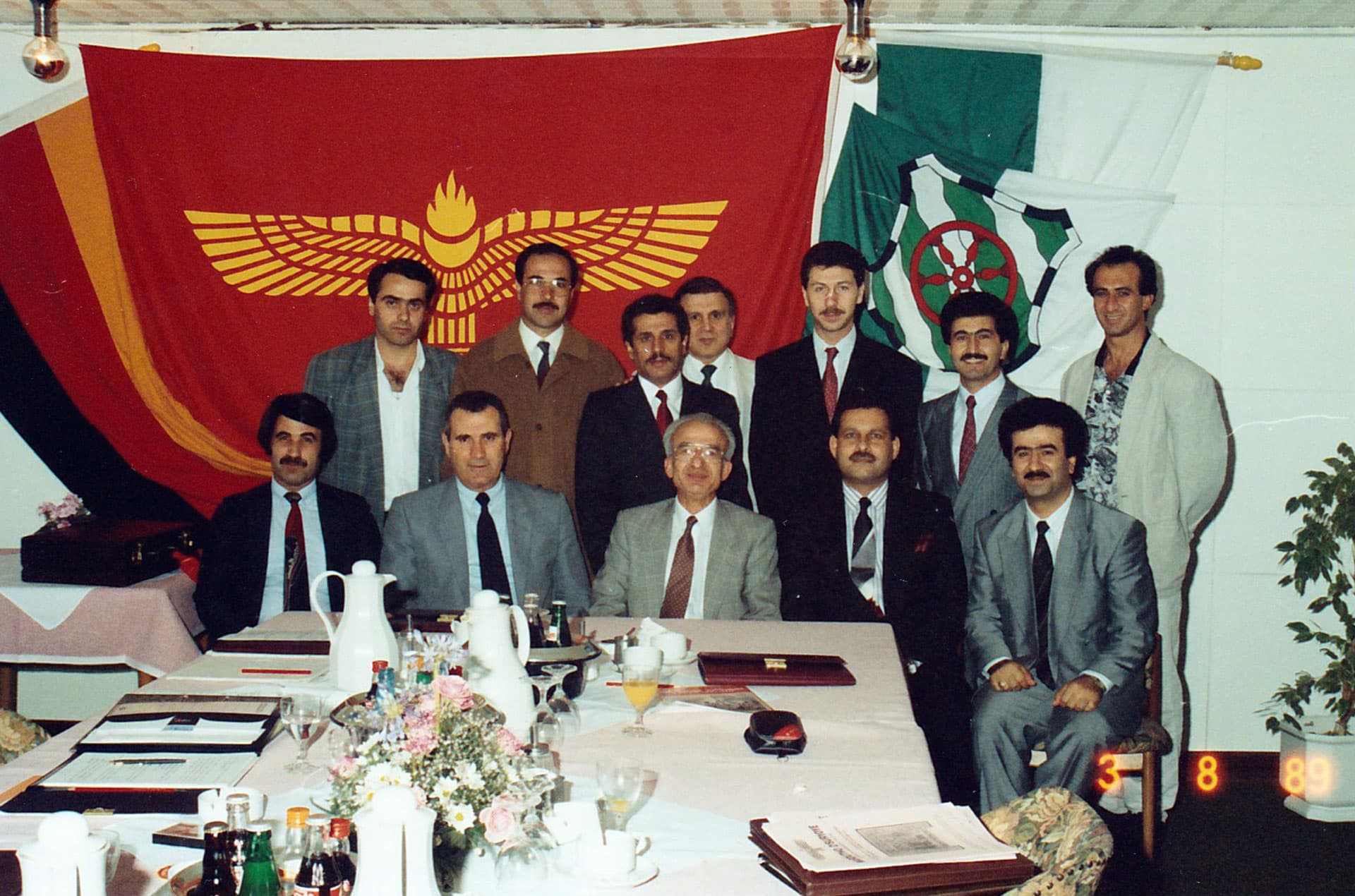

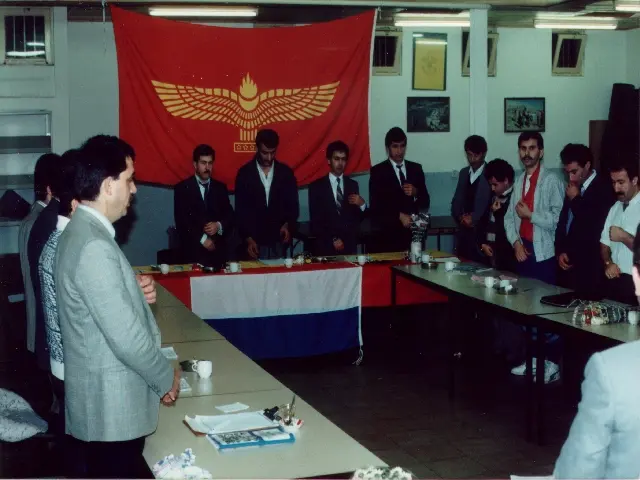
Arameans in the Netherlands, also known as Suryoye in the Netherlands, sometimes identify themselves as Syriacs (not to be confused with Syrian Arabs) and form an ethnic-cultural minority of approximately 30,000 people. The community is largely settled in Twente, with significant numbers also residing in Amsterdam and the surrounding areas. Most Arameans in the Netherlands originate from Turkey, Syria, Lebanon, and Iraq, having left their homelands due to oppression and discrimination.
Arrival in the Netherlands
Shortly after World War II, Western Europe sought foreign labor. Consequently, the reconstruction of the Netherlands attracted dozens of Aramaic workers between 1965 and 1975. Many were employed in the industrial sector in Twente cities such as Enschede, Hengelo, and Oldenzaal, as well as in cities like Amsterdam and Amersfoort.
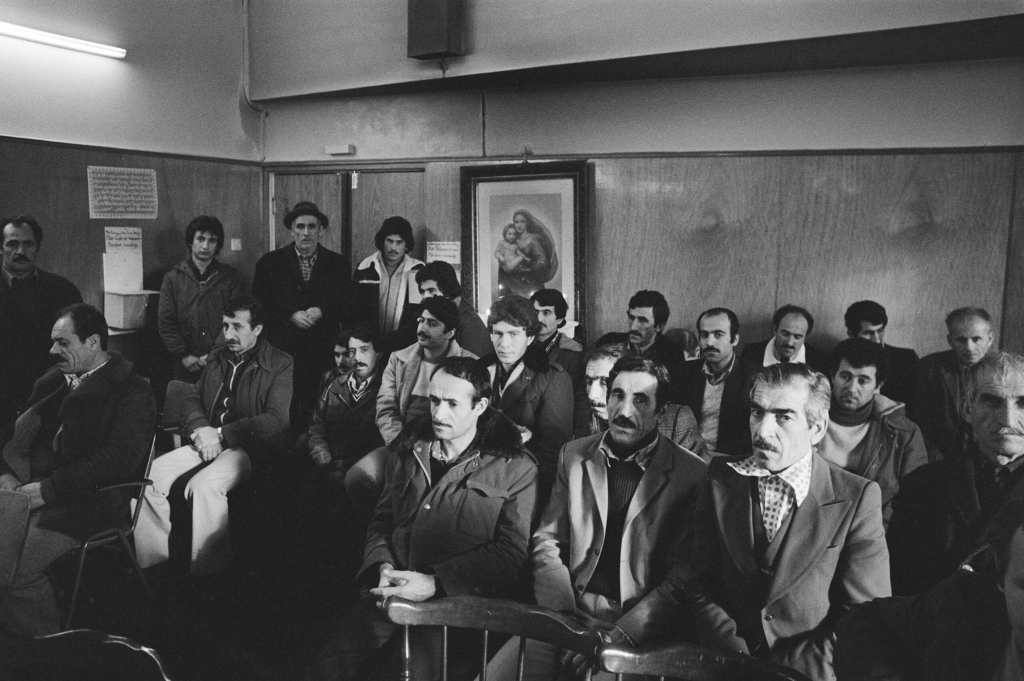
After 1975, Arameans arrived in the Netherlands as political refugees due to rising tensions between the Turkish government and the Kurdish PKK in the Aramaic region of Tur Abdin. On April 13, 1979, approximately 350 Arameans occupied the St. John's Cathedral in 's-Hertogenbosch because they were threatened with deportation; the occupation was intended to last only the Easter weekend but ultimately lasted 93 days before the government decided to grant the refugees status. Arameans from Turkey, like Armenians who fled Turkey, became known by the name "Christian Turks" or "Church Turks."
In 1981, 150 Arameans occupied the Mor Yuhanon Church in Hengelo following the rejection of their asylum applications. From the 1980s and 90s, Arameans from Syria followed, and after the first and second Gulf Wars, Arameans from Iraq arrived.
At the peak of the Aramaic refugee flow, two Aramaic women, Yildiz Saado and Mariam Youssef, were detained and subsequently forcibly returned by plane to Damascus along with Yildiz's 5-year-old daughter. The families of both women remained in the Netherlands and went into hiding. One of Yildiz's daughters, Carolien Saado, was invited to programs such as the Jeugdjournaal, NOS Journaal, and Sonja op donderdag. Her life was documented in a film by VPRO.
After months of hiding in churches across the country and a period of intense public debate, the three deported Arameans were eventually brought back to be reunited with their families and were granted status in the Netherlands. In 1981, the Suryoye Aramaic Federation Netherlands was founded in Enschede to provide support for asylum procedures and integration while promoting the preservation of their own identity, language, and culture.
Religion
The Arameans are a predominantly Christian community, the majority of whom are affiliated with the Syriac Orthodox Church of Antioch. There are thirteen Syriac Orthodox parishes in the Netherlands, nine of which are located in Twente. Additionally, the Mor Ephrem Monastery in Glane features the largest crypt complex in Europe. There is also one Syriac Catholic church building in Arnhem and an Assyrian Church of the East parish in Zeist.
| Parish | Location | Since |
| St. John the Apostle | Hengelo | 1977 |
| St. Ephrem Monastery | Glane | 1981 |
| Mother of God Church | Amsterdam | 1985 |
| St. Ignatius Nurono | Rijssen | 1994 |
| St. Benyamin (Assyrian) | Zeist | 2024 |
Language
Language is vital to the community, especially as older generations use Aramaic to communicate within the diaspora. To prevent language loss, Arameans teach the language to younger generations through Sunday schools (Madrashto). Until 2004, the Dutch government provided mother-tongue education in schools, but this has since been abolished in the regular education system.