
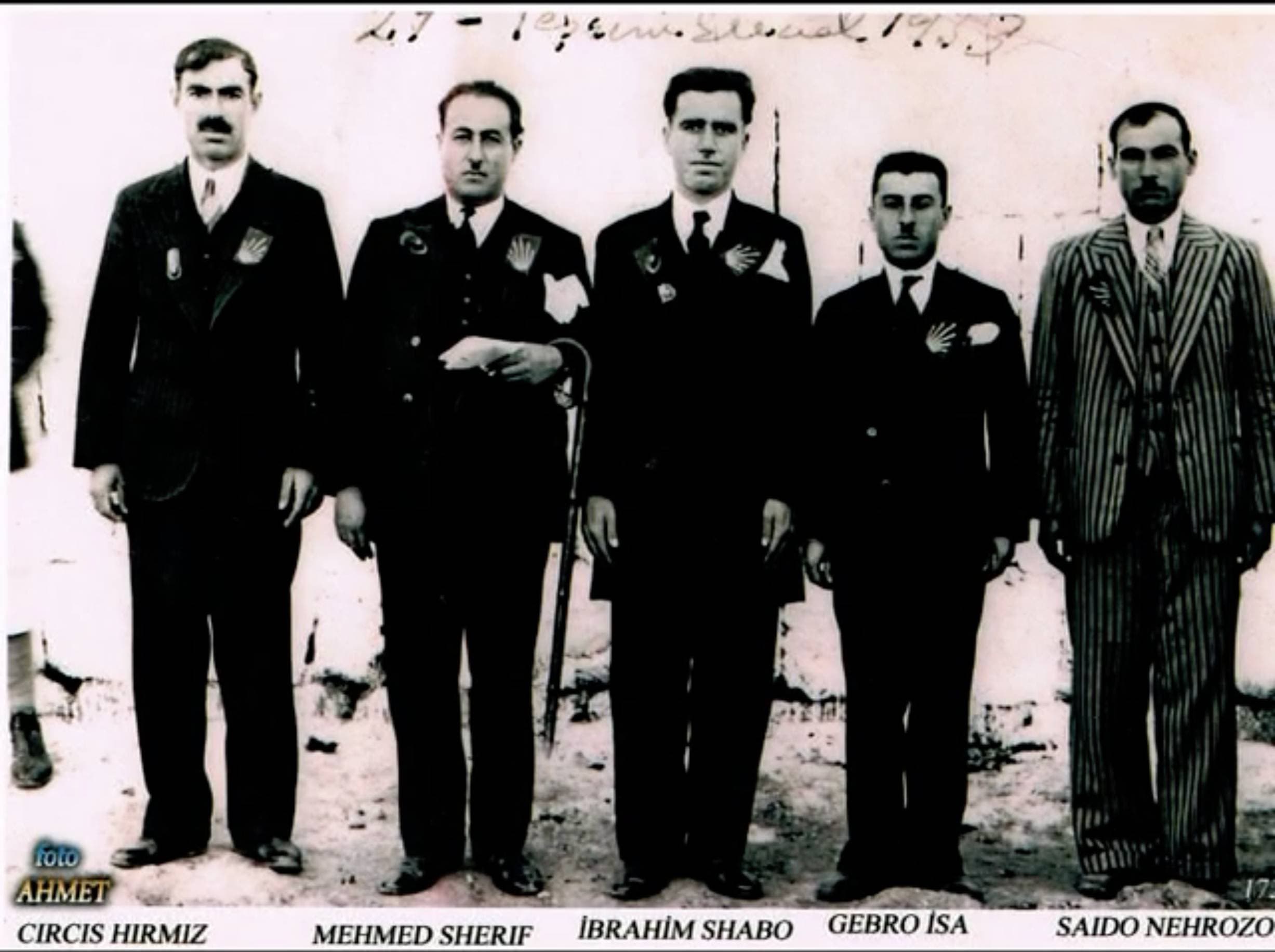
Midyat, which administratively included the Estel section, underwent a rigorous census and "guard tax" implementation following the 1960 military coup, where taxation was notably based on the number of outer doors. Although the Midyat section held a resourceful Syriac-Aramean Christian majority of approximately 5,000 against Estel's 4,000 Muslims, the prestigious mayoral post had not been held by a Syriac-Aramean Christian since Sayfo. Political tension centered on the rivalry between the two sections; Midyat residents, voting collectively by clan rather than ideology, preferred a local Muslim mayor over one from Estel. To secure this, Midyat leaders, including Ibrahim Shabo and Nuri Aziz, formed a strategic pact after the 1954 election to ensure the mayoralty remained under Midyat's control.
The Death of Nuri Aziz
The agreement united the majority of the townspeople and thus also the entire countryside. The rest of the inhabitants were forced to comply. In the spring of 1956, the mayor Nuri Aziz was on his way to the provincial capital Mardin on a business trip. He and a municipal official stepped into a truck in the morning. Nuri was in a bit of a hurry and therefore asked the driver to increase the speed. Just before the village of Kabala, at a sharp downhill slope on a high mountain, Nuri was pushed out of the truck cab against the rocks and into the ravine thirty meters down. He was crushed to death. The official Hassan Sare testified that there was a civil officer along on the journey and that this officer sat between him and Nuri in the cab. The mysterious man disappeared from the crime scene together with the driver before the police arrived at the scene. Whether Nuri fell by pure accident because the car door opened or if someone had pushed him was never investigated. No given enemy that the family could point to as a suspect for the crime existed and Nuri's death therefore became the subject of great discussion. Without demanding a new election, the majority of Midyat's political establishment agreed to appoint Nuri's wife Zekiye as mayor and the Azizke family was thus satisfied.
The Poisoning of Ibrahim Shabo
Just over a month after Nuri's death, Ibrahim Shabo was in Mardin to attend a business meeting. Ibrahim was a reliable construction contractor and therefore his services were prioritized over others to take over the government's construction projects. Ibrahim thus created many jobs for the working people of Midyat. Ibrahim was generous to his employees, which is why people wanted to work with him. The concept was successful and became more profitable, which led to Ibrahim being hired for even more projects and he made big profits. Ibrahim had arranged to meet a government official at a cafeteria in central Mardin. The man arrived at the cafeteria before Ibrahim to prepare the meeting place and invite his guest. When Ibrahim arrived at the cafeteria, the man greeted Ibrahim in a friendly and polite manner and then went to the small bar himself. The man bought a cup of tea, paid in cash and, without attracting the attention of Ibrahim or anyone else, placed the tea glass in front of Ibrahim while excusing himself to run a simple errand. The man left Ibrahim alone to return shortly. Ibrahim stirred the tea with the sugar cubes that the man had already put in the tea glass and sipped half of the hot tea without suspecting anything bad. Suddenly, Ibrahim sank slowly and fell helplessly to one side of the simple table. The cafeteria owner and the wait staff knew their generous guest from Midyat well and all ran in panic to his aid. There was a small commotion and panic around the collapsed man. The cafe owner knelt down and straightened Ibrahim against the back of the chair while calling to his employees to run quickly and get a car to take the guest to the hospital.
Azze Discovers the Body
Azze dbe Murado is the daughter of the well-known Shamune Hanne. She was with her husband at the cafeteria where Ibrahim Shabo collapsed. Azze was a good friend of Ibrahim. She saw him before he entered the cafeteria but because she felt that Ibrahim looked like he was in a bit of a hurry she told her husband that they should wait outside for a while until Ibrahim came out. Azze suddenly heard some people screaming behind her. She turned around and looked in through the window and to her surprise she saw Ibrahim lying there completely lifeless on the floor. Azze hurried in and sat down next to Ibrahim to make sure it was him lying there. Yes, it was him. She screamed loudly: "What bloody bastard is it that has shot my brother?". She carefully lifted Ibrahim's head and placed it on her lap, carefully checking for body injuries. One of those in the cafeteria told Azze that Ibrahim had not been shot, but must have had a cardiac arrest. Several others said the same thing: that he was sitting alone at the table and suddenly collapsed. After just a few minutes, a passing doctor entered the cafeteria. The doctor's initial assessment was that Ibrahim was already dead. Ibrahim was rushed to the hospital in Mardin, where the doctors did everything they could, but were unable to save his life. In the morning of the same day, the doctor in charge at the hospital announced that Ibrahim Shabo had died.
A Nation in Mourning
The news spread throughout Mardin and soon to Midyat and all of Tur Abdin. The news of Ibrahim's death created a human earthquake in Midyat and the entire countryside. Thousands of people from near and far flocked to the Ganno district and early Saturday morning Ibrahim's coffin was carried on the shoulders of the mourning people from his home to the Mor Abrohom Monastery. There, a religious ceremony was first held, followed by high-profile speeches by several celebrities. Ibrahim was buried in a newly built mausoleum in the monastery's large courtyard. The nation's flagship, the pious leader who defended the Midyat people in all situations was gone. A leader figure who held the torch of victory aloft and showed the way for the battered Syriac-Aramean people had been extinguished. Midyat history's most talked-about Ibrahim, the epoch, went to the grave completely without warning. General national mourning came by itself over Tur Abdin's Syriac-Arameans. The fear and the anxiety of sorrow could easily be read on the people's faces, but life went on.
More photos from library
No items found for this query.