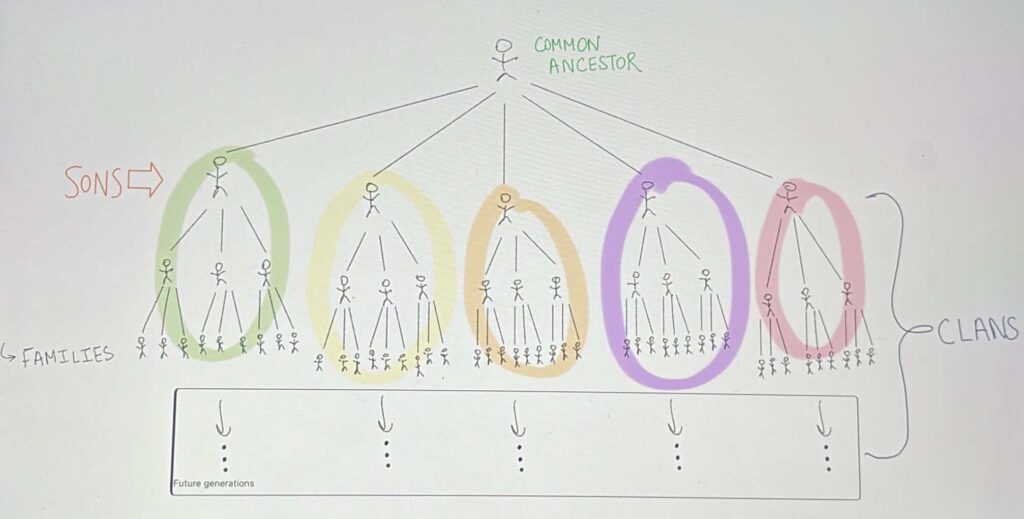
1. The Common Ancestor (The Root): Every story begins with a root. In Tur Abdin, this is the Common Ancestor – a revered patriarch, often a legendary or historical figure, who first settled a village or founded a prominent lineage. This individual serves as the unifying point of identity, the wellspring from which all subsequent generations flow, establishing a collective sense of belonging for everyone descended from him.
2. The Sons (The First Division): From this common ancestor emerge his Sons. This marks the first major division in the lineage, as each son becomes the progenitor of a distinct branch of the expanding family tree. Crucially, these sons often lend their names to what will eventually become the powerful Clans of a village, laying the groundwork for the its socio-political structure.
The Power of the Clan: Be
As these initial branches grew, they solidified into formidable collective units known as clans.
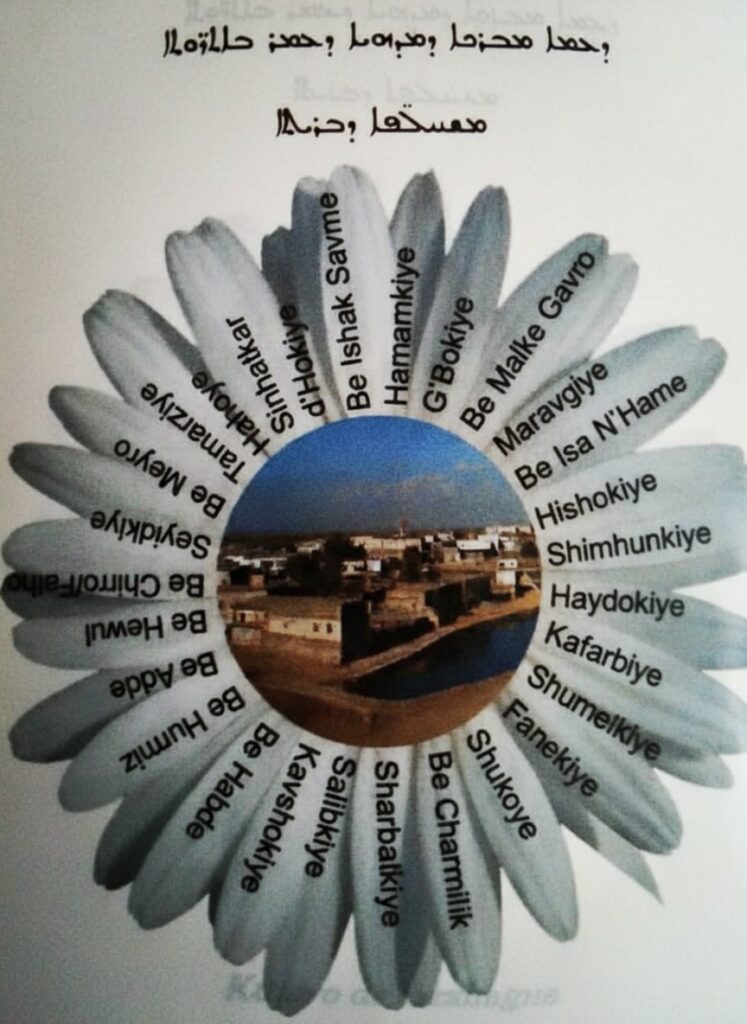
3. The Clans (The Collective Identity): A clan or a tribe (Sharbtho in Syriac Aramaic) is essentially a collection of numerous families, all bound by their shared descent from one of the original "sons" of the common ancestor. In the Aramean tradition of Tur Abdin, these clans are often referred to as "Be" (derived from the Syriac Beth, meaning "house"). Rarely, in the Kurdish speaking villages such as Hah, one can hear the word "Mala" (a term of Kurmanji origin also meaning "house" or "family"). When you ask someone in Tur Abdin, "From what Be are you?" you are inquiring about their clan affiliation, a fundamental aspect of their identity.
In village life, clans were far more than just family trees. They were vital sociopolitical and protective units:
- Residential Quarters: Members of the same clan often lived in close proximity, forming distinct quarters or neighborhoods within the village, sometimes even sharing common courtyards or interconnected houses.
- Collective Land Ownership: Clans might collectively own and manage agricultural lands, water sources, or other resources, fostering economic interdependence.
- Unified Action: In times of dispute, external threat, or community projects, the clan acted as a unified force, led by its designated clan chief. This chief was not merely a figurehead but an influential leader responsible for mediating conflicts, representing the clan's interests, and ensuring its welfare.
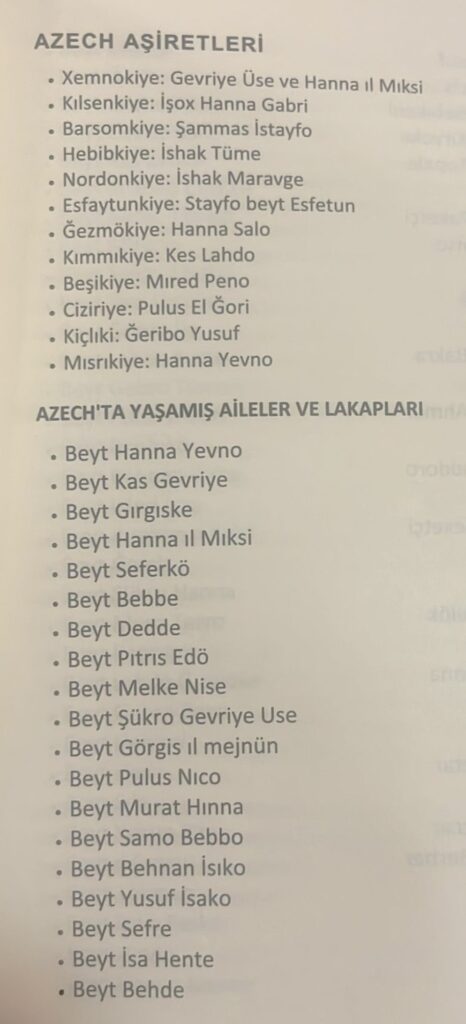
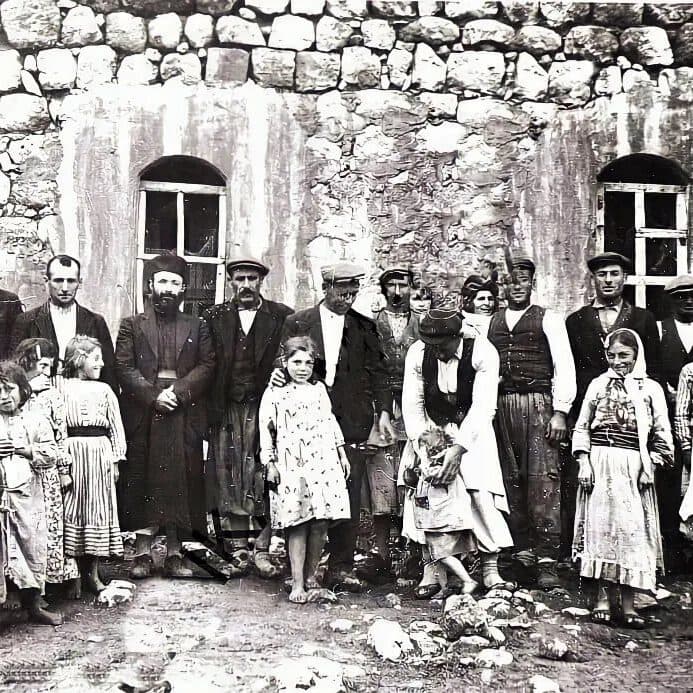
4. The Families (Iqaryotho): Within each clan are the individual Families (Iqaryotho). These are the distinct households, typically centered around a living grandfather or an elder, comprising parents, children, siblings, cousins and often extended relatives living within the same compound or closely associated dwellings. While independent in their daily lives, these families remain intrinsically linked to their broader clan, sharing its heritage and participating in its collective life.
5. Future Generations (The Living Legacy): This entire system is not a static relic of the past but a dynamic, living legacy. The concept of Future Generations highlights that this process of growth and expansion continues to this day. Lineages continue to branch, new families are formed, and the social fabric of Tur Abdin adapts, yet its foundational principles remain intact.
Surnames: A Shifting Landscape within Clans
A common misconception is that all members of a clan would share a single surname. However, this was not historically the case in Tur Abdin, and it sheds light on the evolving nature of identity. Before the modern era, particularly before the early 20th century and the imposition of official surnames in Turkey:
- Patronymic Naming: Individuals were often known by patronymics (e.g., "Shmuel son of Ya'qub") or by their Be affiliation (e.g., "Gabriel Shem'un dBe Haydo"). Different families within the same large clan might use varying descriptive names or honorifics, leading to a diversity of informal surnames.
- Diversity within Unity: Records such as patriarchal registries from the 1870s clearly show that even within a single, recognized clan, distinct family branches might have had their own informal surnames or identifying names. This highlights that while clan identity was paramount, individual family units maintained their own distinct markers.
- The Erasure of Names: The Surname Law of 1934
- A critical, and often painful, chapter in this history is the evolution of surnames. Historically, members of a single clan did not carry one uniform last name. Instead, they were known by their Beh or patronymics, and even within one clan, different branches carried distinct family names that held centuries of history.
- The Forced Imposition under the Turkish Surname Law of 1934 changed this landscape forever. This was not a natural evolution but a forced imposition designed to advance the Turkification of the state.
- Targeted Assimilation: By mandating Turkish-only surnames, the state attempted to erase the centuries-old Aramean names that carried the specific history, language, and identity of the Tur Abdin people.
- The Break in Lineage: Local officials often assigned arbitrary Turkish names based on professions, physical traits, or random nouns. This created a visible fracture in the lineage; today, members of the same ancient Beh may carry four or five different Turkish surnames.
- Despite this state-sponsored attempt to dilute Aramean identity through naming, the clan system survived. The "official" name on a passport could be changed, but the knowledge of one’s Beh remains an unbreakable oral tradition. Today, Arameans still recognize their shared clan identity, proving that deep-seated roots transcend modern impositions.
Cities vs. Villages: Adapting the System
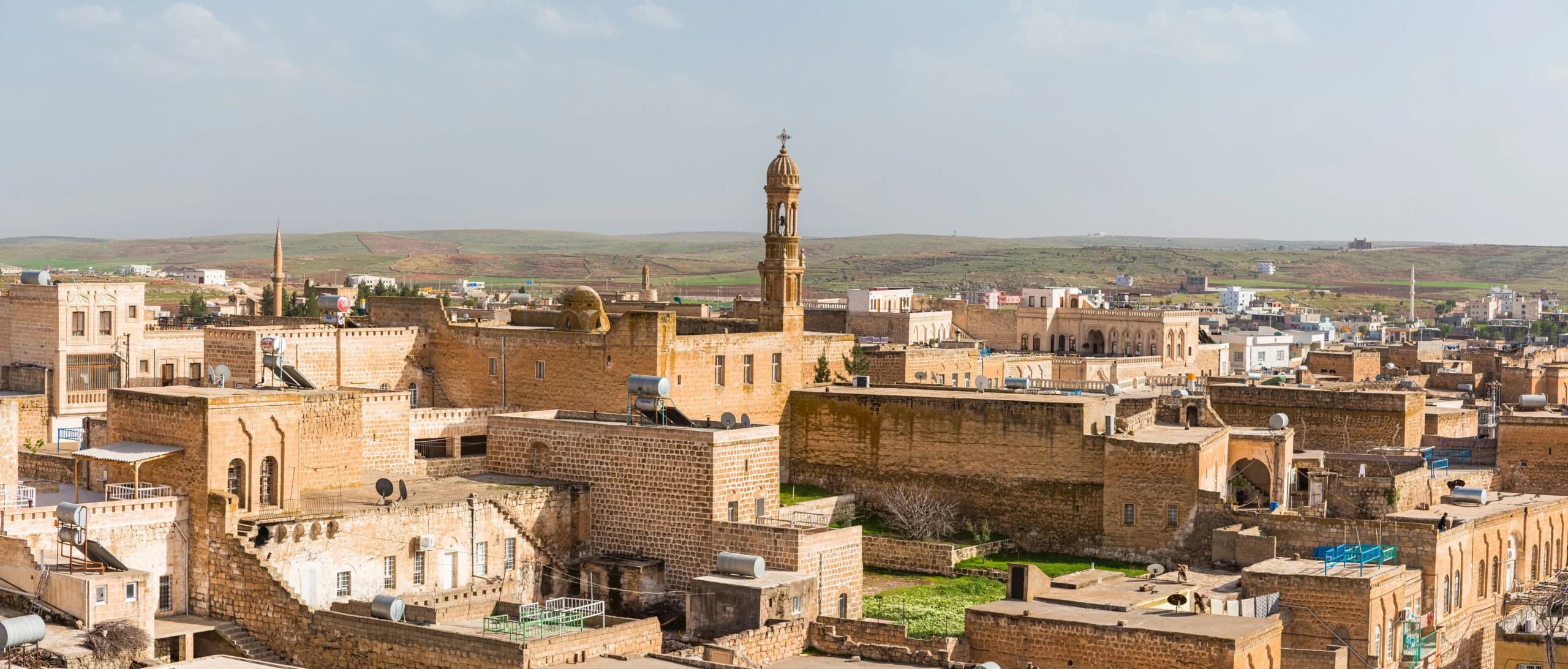
While the core lineage principles remained, the vast differences in population size, economic activity, and social dynamics meant that cities like Midyat and Mardin likely saw adaptations to this system compared to smaller, rural villages.
- Village Life: In villages, the clan system was often more overtly dominant. Physical proximity, shared agricultural practices, and a more homogenous population reinforced clan loyalties and structures, with the clan chief holding significant, often undisputed, authority. Everyone knew their Be and its relation to others.
- Urban Complexity: In cities, with their larger, more diverse populations, varied professions (merchants, artisans, clergy, laborers), and influx of people from different regions, the clan system, while still present and important, might have evolved differently:
- Residential Segregation: Even in cities, clans often congregated in specific neighborhoods or quarters (shawthotho), maintaining a sense of community and security. For example, in Midyat, known neighborhoods included i Shawtho dBe Rhawi or i Shawtho dBe Chalma.
- Beyond Kinship: Urban life introduced more opportunities for association based on trade guilds, other Christian affiliations (such as Syriac Catholics and Syriac Protestants), or professional interests, potentially diversifying social networks beyond strict clan lines.
- Political Influence: Clan chiefs in cities would still wield influence, but their power might be balanced by other urban institutions, religious leaders, or a more formalized municipal structure. The sheer number of families meant that while the Be identity was strong, daily interactions were necessarily more diverse.
- Evolving Mentalities: Urban centers naturally fostered different mentalities, often more cosmopolitan and individualistic, though the deep-seated respect for lineage and family honor remained paramount.
In essence, while the village model represents the most 'pure' form of this traditional system, the cities showed its remarkable flexibility, adapting to greater population density and socioeconomic complexity while retaining the fundamental essence of shared heritage and collective identity.